What Makes the Right Yoga Studio and Teacher for You?
Starting a yoga practice can be transformative, but choosing the right environment is key to consistency and safety. The ideal studio provides more than just mats; it offers a supportive community and qualified guidance that helps you build strength while deepening your understanding of breathwork and alignment. To find your perfect fit, focus on evaluating both the physical space and the instructor's expertise.
Why is Finding Qualified Guidance So Important?
A qualified yoga instructor acts as your guide, ensuring you understand not only how to perform a pose but also why it benefits your body and mind. Unlike simply following videos online, an in-person teacher can provide immediate feedback that prevents injury and deepens your practice safely.
What does a good teacher do?
- Correct Alignment: They spot subtle misalignments (e.g., knee tracking, spine curve) and offer real-time adjustments to maximize benefit and prevent strain.
- Provide Modifications: They teach you how to adapt poses for different body types, fitness levels, or physical limitations (like pregnancy or chronic pain).
- Explain the 'Why': They connect the physical postures (asanas) to the breathing techniques (pranayama) and the philosophy of yoga, giving context beyond just stretching.
Key Qualities to Look for in an Instructor
When evaluating a potential teacher, look for these professional traits:
- Deep Knowledge: The instructor should be well-versed not only in poses but also in anatomy and injury prevention. They should recommend modifications rather than simply saying "push through the pain."
- Clarity of Instruction: Instructions must be clear, concise, and easy to follow. A great teacher breaks down complex movements into simple, actionable steps.
- Empathy and Patience: The best teachers create a non-judgmental space. They understand that progress is non-linear and are supportive when you struggle.
- Commitment to Growth: Look for evidence of continuing education. A professional teacher regularly attends workshops or training, ensuring their knowledge remains current with the latest research in fitness and wellness.
How Do I Choose a Yoga Style That Fits My Goals?
Yoga is not monolithic; different styles target different physical outcomes. Understanding your goals—whether it's stress relief, building strength, or improving flexibility—will help you narrow down the best style for you.
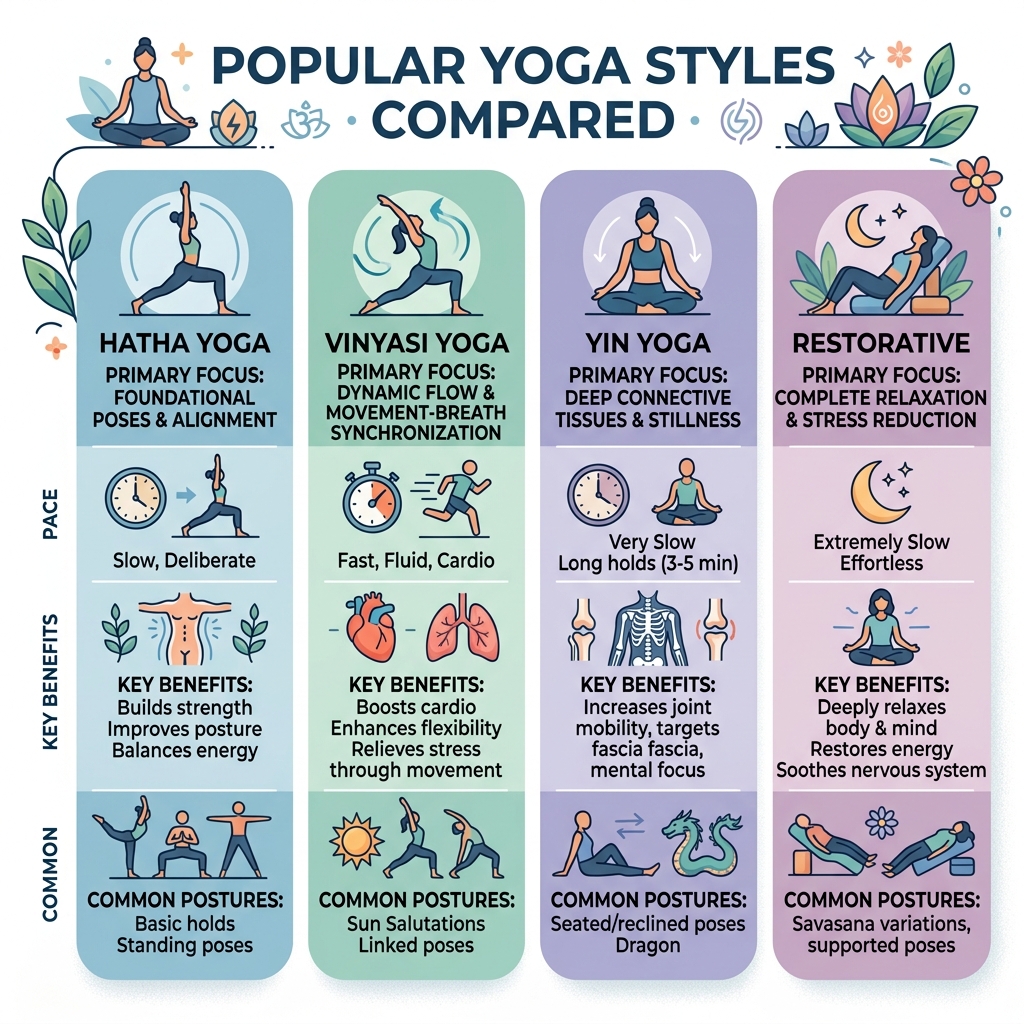
Popular Yoga Styles Explained:
- Vinyasa Flow: This is a dynamic style that links movement to breath. It’s often described as a "flow" and provides a cardiovascular workout, making it excellent for building heat and stamina.
- Hatha Yoga: Often considered the foundational practice, Hatha focuses on holding basic poses (asanas) for longer periods. This is ideal for beginners who need time to learn proper alignment.
- Yin Yoga: A slow, meditative style that involves holding passive stretches for 3–5 minutes. It targets the deep connective tissues (fascia) and is superb for improving flexibility and calming the nervous system.
- Restorative Yoga: This gentle practice uses props (bolsters, blankets) to support the body in comfortable positions. Its primary goal is relaxation and stress reduction, making it perfect after a stressful week.
- Ashtanga Yoga: A rigorous, structured style following a specific sequence of poses. It is highly physical and requires dedication but builds immense strength.
Tip: Don't commit to one style immediately. Most studios offer introductory packages that allow you to sample several types before deciding what resonates most.
What Factors Should I Consider When Selecting a Studio?
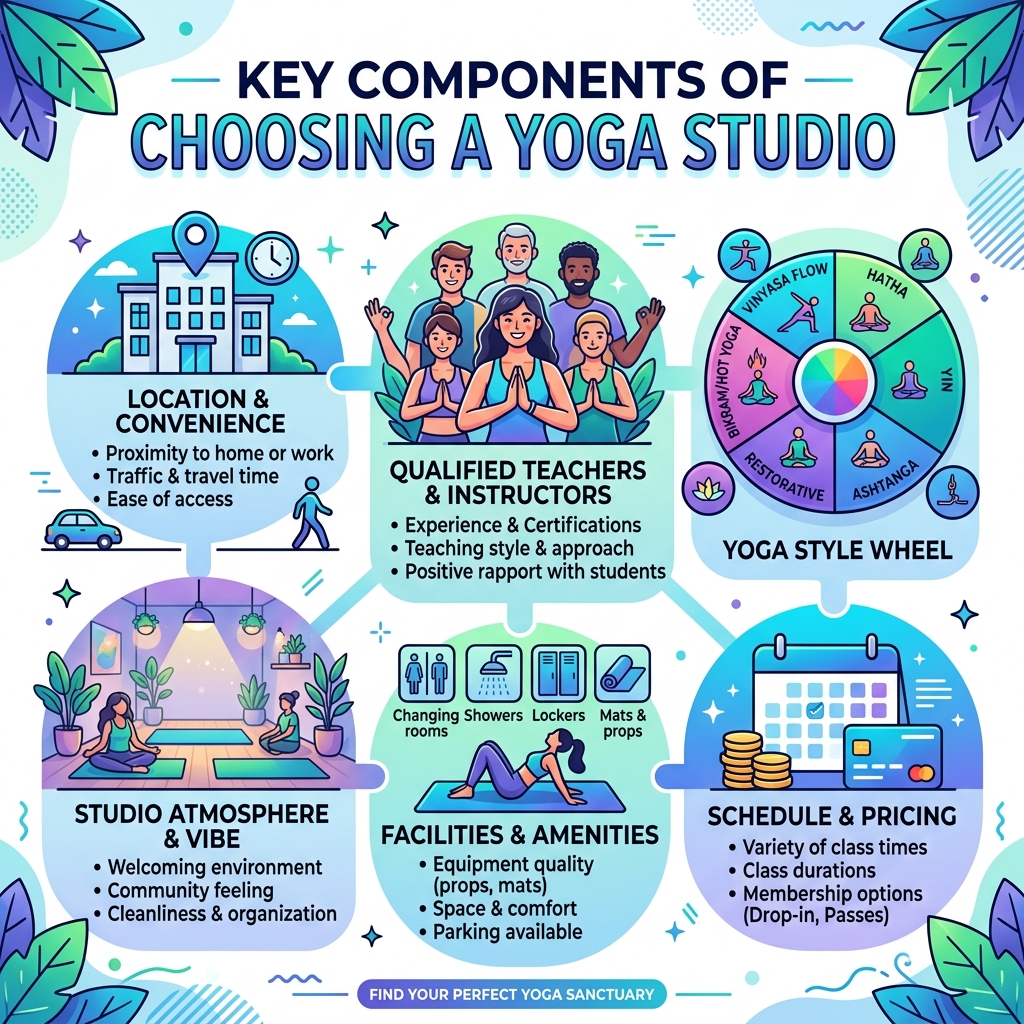
The studio environment plays a huge role in your consistency. Treat the search like choosing any other fitness class—logistics and atmosphere matter just as much as the poses themselves.
1. Logistics: Location and Schedule
- Convenience: Choose a location that fits seamlessly into your daily routine (near work or home). If it's too difficult to get to, you won't go regularly.
- Variety of Times: Ensure they offer classes at times that accommodate your life—mornings for energy, evenings for de-stressing, and weekends for flexibility.
2. Community Vibe: Does It Feel Welcoming?
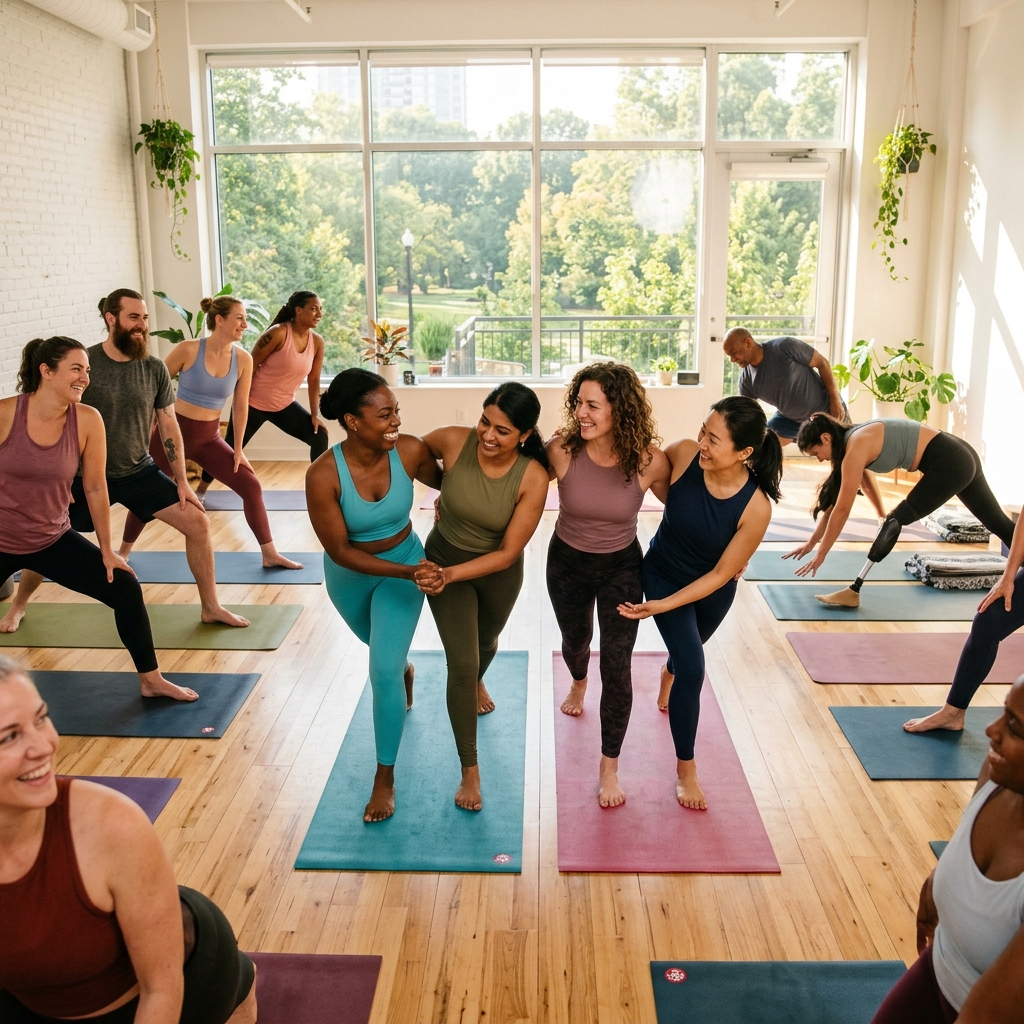
A studio should feel like a supportive community, not a competitive gym. Look for signs of inclusivity:
- Are the students friendly to newcomers?
- Does the staff actively foster connection through workshops or social events?
- The sense of belonging is often what keeps people motivated long-term.
3. Practical Considerations: Cost and Cleanliness
- Pricing Structure: Understand if they offer drop-in rates, class packs, or monthly memberships. Always ask about student discounts or introductory offers.
- Hygiene: Pay attention to the cleanliness of the mats, props, and changing areas. A well-maintained space shows professionalism.
What Questions Should I Ask Before Joining?
Before you sign up for a membership, take advantage of drop-in rates and ask these questions:
- "What is your approach to teaching beginners?" (Listen for patience and detailed instruction.)
- "Do you offer modifications or variations for different body types/injuries?" (This shows their commitment to safety.)
- "What are the studio's policies regarding cancellations and refunds?" (Crucial for managing expectations.)
- "What is the average class size?" (Smaller classes mean more individualized attention from the teacher.)
The Holistic Benefits of Yoga Practice
The benefits of regular practice extend far beyond physical flexibility. By integrating movement, breathwork, and mindfulness, yoga positively impacts multiple systems in your body:
- Stress Reduction: Focusing on the breath (pranayama) activates the parasympathetic nervous system, helping to calm the "fight or flight" response associated with chronic stress.
- Improved Mobility & Strength: Consistent practice strengthens core muscles and improves joint range of motion, which is vital for overall physical health as you age.
- Mental Clarity: The combination of movement and mindful breathing acts as a moving meditation, reducing anxiety and improving focus.
- Better Sleep Quality: Regular yoga helps regulate the nervous system, making it easier to fall asleep and stay asleep.
Summary: Finding Your Perfect Flow
Finding your "yoga tribe" is about finding alignment—not just in your poses, but between your needs and the studio's offerings. Take time to explore different styles, observe the community atmosphere, and trust your intuition. By prioritizing a qualified instructor who emphasizes safety and modification, you can ensure that your yoga journey is both effective and deeply enjoyable.
Disclaimer: The information provided in this article is for general informational purposes only and is not intended as a substitute for professional medical advice, diagnosis, or treatment. Always seek the advice of your physician or other qualified health provider with any questions you may have regarding a medical condition or treatment.
Frequently Asked Questions
Hatha Yoga or Gentle Yoga are excellent starting points as they focus on foundational poses and proper alignment at a slower pace.
Start with one or two classes per week. Consistency is more important than intensity when building a routine.