
Outdoor running is a powerful form of exercise that delivers benefits far beyond simple cardio fitness. By combining physical exertion with the restorative power of nature, it significantly boosts cardiovascular health, reduces stress, and improves overall mental clarity. This guide provides essential knowledge on maximizing your run—from selecting safe trails to mastering proper gear and technique.
Why is Outdoor Running So Good for Your Body and Mind?
Outdoor running offers a holistic workout that engages more muscle groups than indoor alternatives. The benefits are twofold: physical strength and mental resilience.
🏃♀️ Cardiovascular Benefits: A Natural Heart Booster
Running strengthens the heart muscle, allowing it to pump blood more efficiently with every beat. Unlike flat pavement, varied outdoor terrain requires your body to work harder, providing a superior cardiovascular challenge.
- Lower Blood Pressure: Consistent running improves blood vessel elasticity, helping to keep arteries flexible and reducing strain on the circulatory system.
- Improved Cholesterol Profile: It helps raise beneficial HDL cholesterol while lowering harmful LDL levels, keeping your heart healthy.
- Enhanced Circulation: Better blood flow ensures that oxygen and vital nutrients reach every cell in your body efficiently.
- Reduced Chronic Risk: Regular activity significantly lowers the risk of developing major conditions like stroke, type 2 diabetes, and chronic heart disease.
🧠 Mental Health Benefits: Nature's Stress Reliever
The combination of physical effort and natural surroundings creates a powerful mental boost. This is often referred to as the "nature effect."
- Stress Reduction: Running releases endorphins, which are natural mood elevators. Furthermore, spending time in green spaces has been scientifically shown to lower levels of cortisol (the primary stress hormone).
- Improved Mood and Focus: The rhythmic nature of running combined with the sensory input of nature can alleviate symptoms of anxiety and depression.
- Mindfulness Practice: Focusing on your breath, foot placement, and surroundings turns the run into a form of moving meditation, helping you stay present and reduce mental clutter.
- Increased Self-Efficacy: Setting and achieving running goals—even small ones—build confidence and self-esteem that translates to other areas of life.

What Are the Best Surfaces for Running?
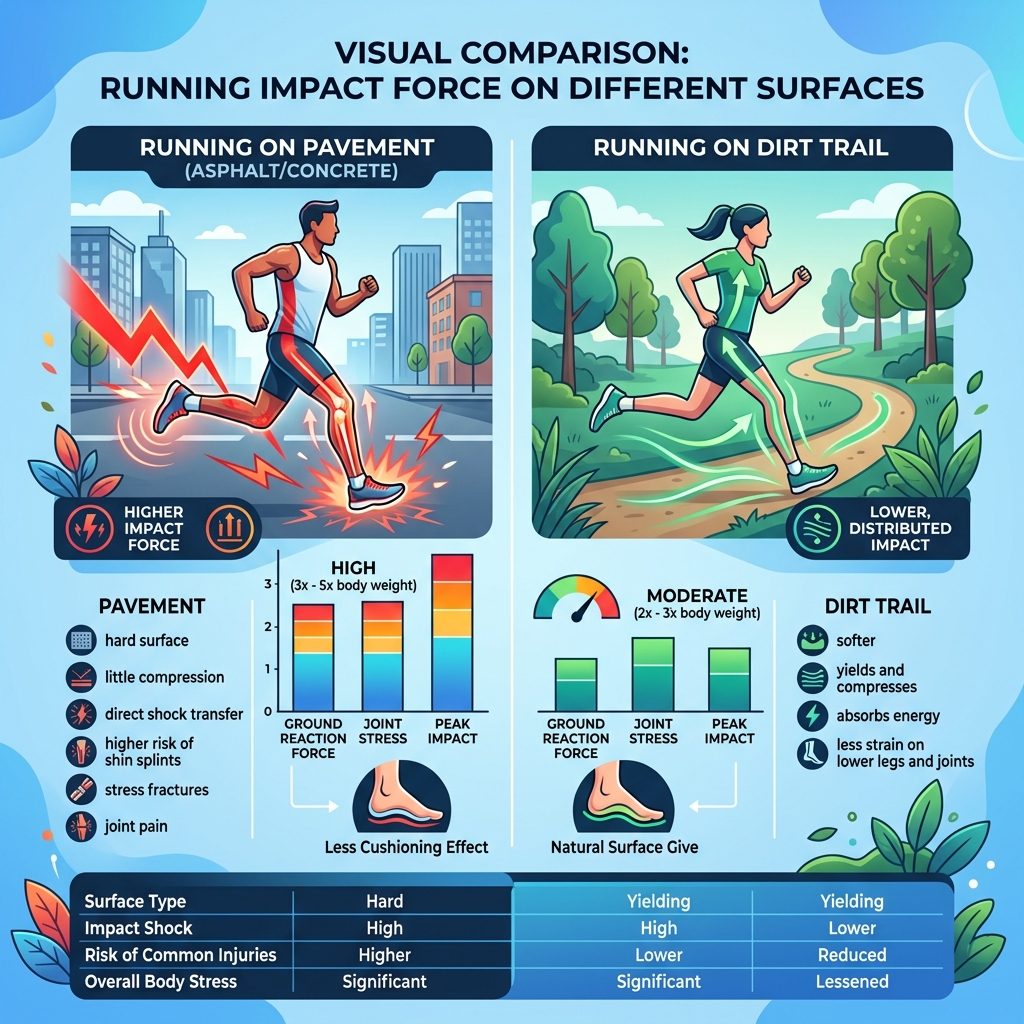
The surface you run on dramatically affects your impact, joint stress, and overall workout intensity. Knowing the difference between surfaces is key to injury prevention.
Understanding Trail Types: Impact vs. Stability
| Surface Type | Pros | Cons | Ideal For |
|---|---|---|---|
| Dirt Trails | Low impact, natural feel, excellent for joint recovery. | Can be uneven, requires careful footing. | General fitness and moderate runs. |
| Gravel Paths | Softer than pavement, more stable than loose dirt. | Can be dusty, still requires attention to footing. | Recovery runs and steady-paced training. |
| Grass | Very low impact, good for strengthening stabilizer muscles. | Slippery when wet, can hide obstacles. | Warm-ups or cool-downs. |
| Pavement/Asphalt | Predictable, easily accessible in urban areas. | Extremely hard, high impact, increases joint stress. | Short, controlled runs (use sparingly). |
| Woodland Trails | Highly varied and scenic, excellent for challenging muscles. | Roots, rocks, and uneven footing increase trip hazards. | Intermediate to advanced runners seeking a challenge. |
💡 Pro Tip: Choosing Your Trail Difficulty
- Beginner: Start with flat, well-maintained gravel or dirt paths. Focus on building consistency before tackling technical terrain.
- Intermediate: Gradually introduce moderate inclines and varied surfaces (woodland trails). This builds strength and agility.
- Advanced: Challenge yourself with steep ascents, rocky descents, and long distances over highly technical ground.
How Do I Gear Up for Outdoor Running?
Proper gear is not just about looking good; it's crucial for safety, comfort, and performance across varied conditions.
👟 Footwear: Road vs. Trail
The most critical piece of equipment is your shoe. Never use the wrong shoe for the terrain.
- Road Running Shoes: Feature maximum cushioning and are designed for predictable, hard surfaces like pavement.
- Trail Running Shoes: Built with aggressive, deep treads (lugs) for superior traction on dirt, mud, and gravel. They also have reinforced uppers to protect against rocks and roots.
👕 Apparel: Staying Comfortable in Any Weather
Always prioritize function over fashion.
- Moisture-Wicking Fabrics: Avoid cotton entirely. Opt for synthetic materials (polyester, merino wool) that pull sweat away from your skin, keeping you dry and preventing chafing.
- Layering System: Dress in layers to adapt to changing temperatures:
- Base Layer: Wicks sweat (e.g., synthetic tee).
- Mid Layer: Provides insulation (e.g., fleece jacket).
- Outer Shell: Protects from wind and rain (e.g., waterproof jacket).
💧 Hydration & Safety Essentials
For any run over an hour, always carry these items:
- Hydration Pack or Belt: Essential for carrying water and electrolytes.
- Electrolytes: Replenish salts lost through sweat with tablets or sports drinks.
- Sun Protection: SPF 30+ sunscreen, sunglasses, and a hat are mandatory.
- Safety Gear: Carry a fully charged phone, whistle, and basic first-aid kit.
What Are the Best Running Techniques for Different Terrains?
Adapting your running form is key to preventing injury and maximizing efficiency when the terrain changes.
⛰️ Mastering Uphill Runs (Ascending)
- Stride: Shorten your stride length; take quick, controlled steps.
- Posture: Lean slightly forward from the ankles (do not slouch). Keep your core engaged.
- Energy: Focus on maintaining a steady, sustainable pace rather than sprinting.
📉 Mastering Downhill Runs (Descending)
- Stride: Take shorter, quicker steps to maintain control and absorb impact.
- Posture: Lean slightly back, keeping your knees soft and absorbing shock through your hips and core.
- Caution: Watch your footing constantly; the risk of overstriding or slipping is highest here.
🌳 Running on Uneven Terrain (Technical)
- Vision: Look several steps ahead, not just at your feet. Anticipate roots, rocks, and dips.
- Stability: Engage your stabilizer muscles in your ankles, knees, and core to maintain balance with every step.
- Foot Placement: Land softly and deliberately; avoid "stomping" your feet.

How Do I Stay Motivated When Running Outdoors?
Motivation is a muscle that needs training! To keep going when the trail gets tough or the weather turns, use these strategies:
- Set SMART Goals: Instead of "run more," set Specific, Measurable, Achievable, Relevant, and Time-bound goals (e.g., "Run 5k without stopping by the end of the month").
- Find a Running Buddy: Accountability is powerful. Running with a friend makes the time fly and provides immediate support.
- Vary Your Routes: Boredom kills motivation. Explore different parks, forests, or historical trails to keep your mind engaged.
- Focus on the Scenery: Practice mindful running. Instead of focusing only on your pace, take a moment to notice the colors, sounds, and smells around you. This turns exercise into an immersive experience.
🚨 Essential Safety Checklist: Running in Nature
Safety must always be the top priority when leaving paved roads. Preparation is non-negotiable.
Before You Leave Home
- Tell Someone: Always inform a friend or family member of your exact route and estimated return time.
- Check Conditions: Review the local weather forecast, trail closures, and potential wildlife warnings.
- Pack Smart: Carry water, electrolytes, energy snacks, and a basic first-aid kit.
On the Trail
- Navigation: Carry a physical map or reliable GPS device (and know how to use it). Do not rely solely on cell service.
- Pace Yourself: Start slower than you think you should. Save your energy for the hardest parts of the trail.
- Wildlife Awareness: Be aware of local wildlife. Make noise while running (singing, talking) to avoid surprising animals. If you encounter large animals, maintain distance and never feed them.
Injury Prevention Checklist
- Warm-Up: Spend 5 minutes doing dynamic stretches (leg swings, high knees) before starting.
- Cool Down & Stretch: Dedicate 5–10 minutes after your run to static stretching (holding stretches). This improves flexibility and reduces soreness.
- Listen to Your Body: If you feel sharp pain, stop immediately. Pushing through injury is counterproductive.
Summary: Embrace the Adventure
Outdoor running offers a unique blend of physical challenge and mental restoration that cannot be matched by indoor exercise. By respecting the terrain, preparing with proper gear, and prioritizing safety, you can unlock your full potential while enjoying nature's unparalleled beauty. Lace up, explore responsibly, and let the wild trails guide you toward better health.
Frequently Asked Questions
While both are beneficial, outdoor running offers varied terrain that provides greater cardiovascular and stabilizing challenges, leading to more comprehensive fitness gains.
Beginners should start on well-maintained dirt or gravel paths. These surfaces offer a good balance of low impact and natural variation without being overly challenging.