Protein is the most talked-about macronutrient in fitness — and for good reason. It's essential for muscle repair, satiety, and metabolic health. But most advice on protein boils down to "eat more chicken breast," which isn't exactly actionable.
Why Protein Matters More Than You Think
Beyond the obvious muscle-building benefits, adequate protein intake supports:
- Satiety: Protein is the most filling macronutrient, helping you naturally eat less without counting every calorie.
- Thermic effect: Your body uses 20–30% of protein calories just for digestion — compared to 5–10% for carbs and 0–3% for fat.
- Muscle preservation during fat loss: When in a caloric deficit, higher protein intake protects lean muscle mass.
Step 1: Calculate Your Target
Use the Mifflin-St Jeor equation to estimate your daily calorie needs, then allocate protein first:
- Sedentary adults: 1.2–1.6 g/kg body weight
- Active individuals: 1.6–2.0 g/kg
- Strength athletes / during a cut: 2.0–2.4 g/kg
For a 75 kg person who trains 3–4 times per week, that's roughly 120–150 grams of protein per day.
Step 2: Distribute Across Meals
Research on muscle protein synthesis (MPS) suggests that spacing protein evenly across meals is more effective than back-loading it at dinner. Aim for 25–40 grams per meal across 3–5 eating occasions.
| Meal | Protein Target | Example |
|---|---|---|
| Breakfast | 30g | Greek yogurt + eggs + berries |
| Lunch | 35g | Grilled chicken salad with chickpeas |
| Snack | 20g | Protein shake or cottage cheese |
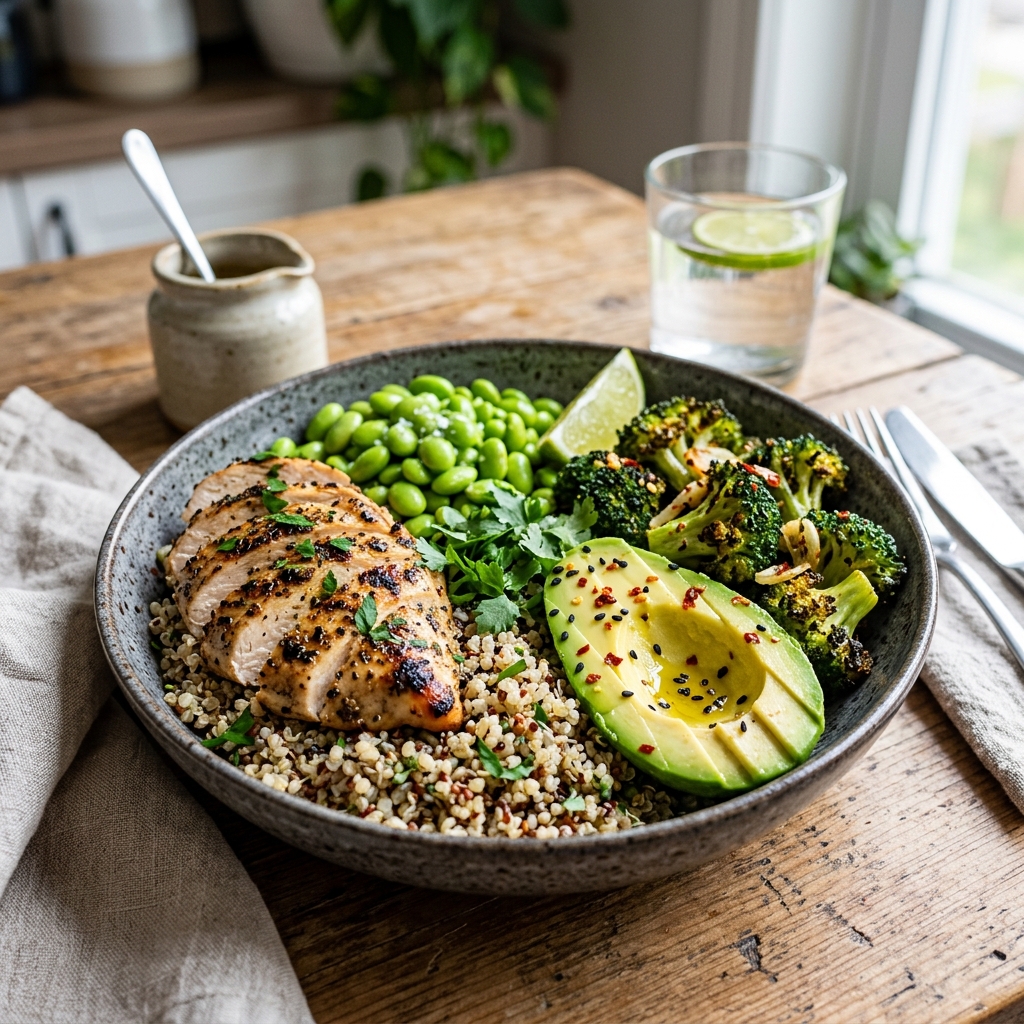
| Dinner | 40g | Salmon with quinoa and roasted vegetables |
Step 3: Choose Quality Sources
Not all protein is created equal. Prioritize complete proteins that contain all essential amino acids:
- Animal sources: Chicken, fish, eggs, Greek yogurt, lean beef
- Plant sources: Tofu, tempeh, edamame, quinoa, buckwheat
- Supplemental: Whey or pea protein isolate for convenience
Common Mistakes to Avoid
- Skipping breakfast protein — Starting the day with only carbs (toast, cereal) misses a key MPS window.
- Relying on one source — Variety ensures you get the full spectrum of amino acids and micronutrients.
- Ignoring leucine — This amino acid is the primary trigger for MPS. Aim for 2.5–3g per meal (found in whey, eggs, and chicken).
The Bottom Line
Building a high-protein meal plan doesn't require expensive supplements or complicated tracking. Start with your weight-based target, distribute it across meals, choose a variety of quality sources, and you're 90% of the way there.
Frequently Asked Questions
Most adults benefit from 1.6–2.2 grams of protein per kilogram of body weight per day, depending on activity level and goals. A sedentary person needs less than someone who strength trains regularly.
Absolutely. Combining legumes, tofu, tempeh, seitan, and whole grains throughout the day can easily meet protein targets. The key is variety and sufficient total calorie intake.
Research shows that distributing protein evenly across 3–5 meals (20–40g per meal) is more effective for muscle protein synthesis than loading it all in one meal.