What is the Difference Between 'Organic' and 'Natural'?
The confusion between "organic" and "natural" labels is one of the most common challenges in modern consumer health. Simply put, "organic" refers to a regulated farming or production method, while "natural" is an ambiguous marketing term that lacks standardized legal definition. Understanding this difference is key to making truly informed choices for your diet, supplements, and skincare routine.
While both labels suggest a move away from synthetic chemicals, they do not guarantee the same level of purity or safety. The goal should always be ingredient transparency—knowing exactly what you are putting into your body or on your skin.
How Are These Labels Defined?
What Does "Organic" Mean in Practice?
When a product carries an official organic certification (like USDA Organic), it means the ingredients and production process adhere to strict, legally enforced guidelines. These standards cover every aspect of the supply chain:
- Pesticide Control: Organic farming prohibits most synthetic pesticides and herbicides, relying instead on natural methods like crop rotation and beneficial insects for pest management.
- GMO Exclusion: The use of Genetically Modified Organisms (GMOs) is strictly prohibited in certified organic products.
- Soil Health Focus: Farmers must utilize natural fertilizers (like compost or manure), which promotes long-term soil biodiversity rather than relying on synthetic chemical inputs that can deplete the earth.
- Animal Welfare: For animal products, standards mandate humane conditions and prohibit the use of artificial hormones or antibiotics unless medically necessary.
Key Takeaway: The "organic" label provides a verifiable standard of practice, offering consumers confidence in the product's origin and production methods.
Why Is "Natural" So Ambiguous?
In contrast, the term "natural" is largely unregulated by federal bodies across many industries (especially cosmetics). A product labeled "natural" may simply mean that no artificial colors or flavors were added—but it can still contain synthetic chemicals, pesticides, and other substances.
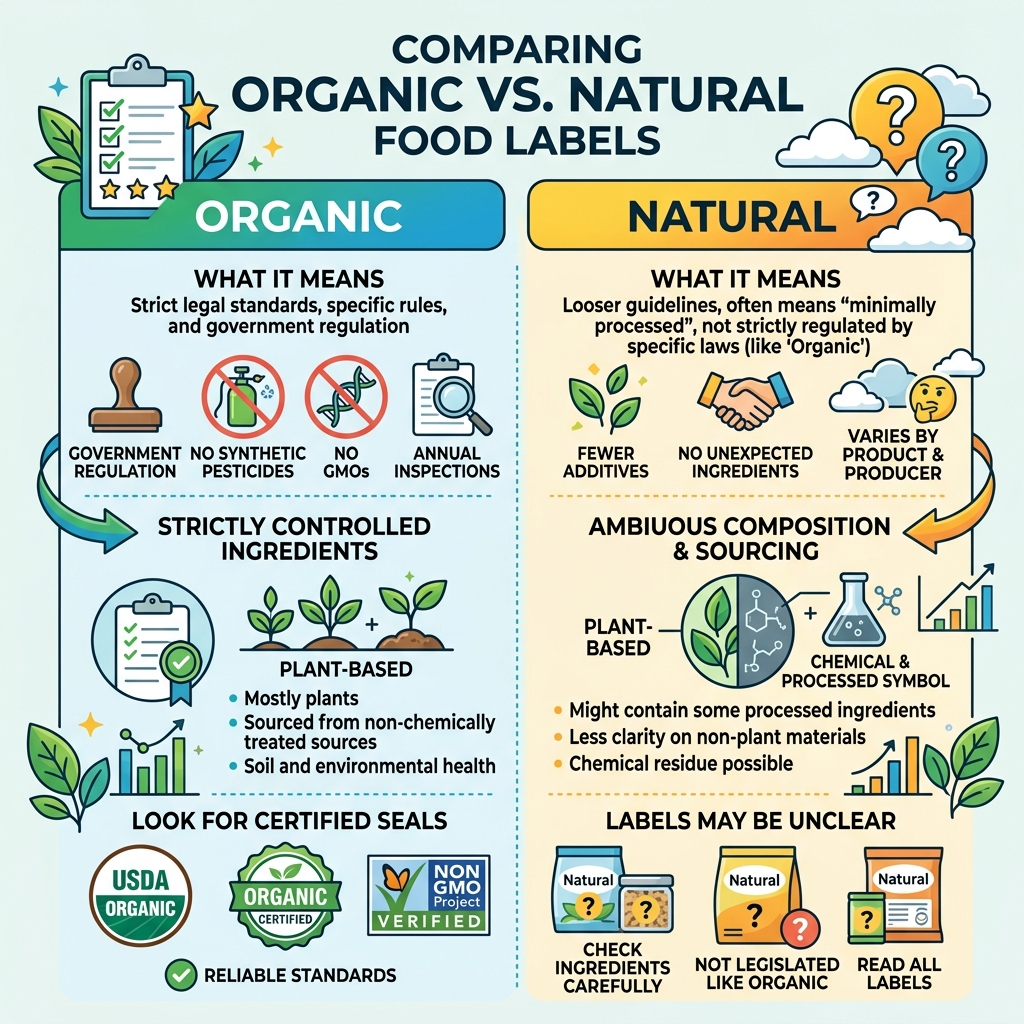
- In Food: "Natural" often means no artificial additives, but it doesn't guarantee freedom from pesticides or GMOs.
- In Skincare: This is the most confusing area. A product can be labeled "natural" while still containing synthetic preservatives (like parabens) or chemical fragrances that are known irritants.
The best rule of thumb: Never trust a label alone. Always read the full ingredient list.
What Are the Potential Health Benefits of Choosing Clean Ingredients?
Choosing products with fewer synthetic inputs offers several potential benefits for your body and the planet, primarily centered around reducing toxic load and supporting sustainable health practices.
1. Reducing Chemical Exposure (Toxin Load)
The primary benefit is minimizing exposure to pesticide residues, herbicides, and industrial chemicals. These substances can accumulate in the body over time, potentially contributing to hormone disruption or other chronic health issues. By choosing certified organic options, you significantly reduce this chemical burden.
2. Supporting Nutrient Density
While research is ongoing, many studies suggest that farming practices focused on building healthy soil (as seen in organic methods) can lead to crops with higher levels of certain antioxidants and micronutrients. Healthy soil equals nutrient-rich food.
3. Environmental Stewardship
Organic agriculture is inherently more sustainable. It promotes:
- Water Conservation: By improving soil structure, it reduces the need for excessive irrigation.
- Biodiversity: It supports a wider range of local flora and fauna compared to conventional monoculture farming.
- Pollution Reduction: It drastically cuts down on chemical runoff that contaminates water sources.
How Can You Make Informed Choices? (Actionable Tips)
Navigating the market requires skepticism and diligence. Use these steps to maximize your purchasing power and minimize risk:
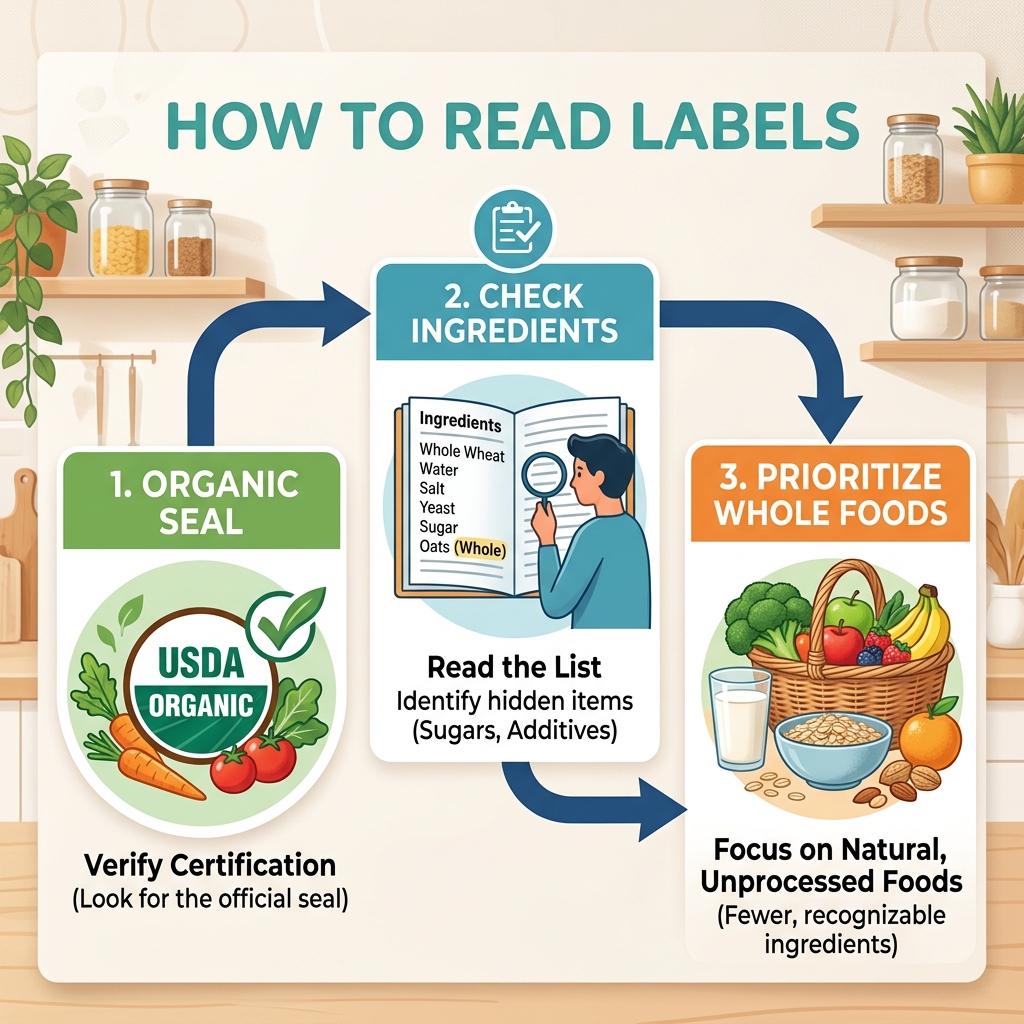
- Prioritize Whole Foods First: Regardless of labeling, focus 80% of your diet on whole, unprocessed foods—fresh fruits, vegetables, lean proteins, and whole grains.
- Use the "Dirty Dozen" Strategy: If you cannot afford to buy everything organic, prioritize buying certified organic versions of produce that are most heavily sprayed with pesticides (e.g., berries, leafy greens). The Environmental Working Group (EWG) publishes this list annually.
- Look for Certifications, Not Just Words: Always seek out recognized seals like the USDA Organic seal. These third-party certifications provide legal assurance of standards compliance.
- Master the Ingredient List: When buying supplements or skincare, look past the marketing claims. Check the ingredient list for known irritants (like parabens, sulfates) and synthetic chemicals you wish to avoid.
- Buy Local and Seasonal: Shopping at farmers' markets allows you to speak directly with producers about their practices, which is often the best way to verify purity and sustainability.
Summary & Next Steps
Choosing between organic, natural, and conventional products is not an all-or-nothing pursuit. It’s a spectrum of choices based on your budget, location, and personal health goals. The most powerful tool you have is your attention to detail. By understanding the difference between regulated standards (organic) and vague marketing terms (natural), you can make decisions that are genuinely beneficial for your body and the planet.
Start small: Commit to making one or two high-impact swaps—like choosing organic produce from the Dirty Dozen list, or switching to a simple, ingredient-transparent moisturizer. These gradual changes build sustainable habits over time.
Frequently Asked Questions
Not necessarily. Focus on reading the full ingredient list and prioritizing whole, unprocessed foods regardless of labeling.