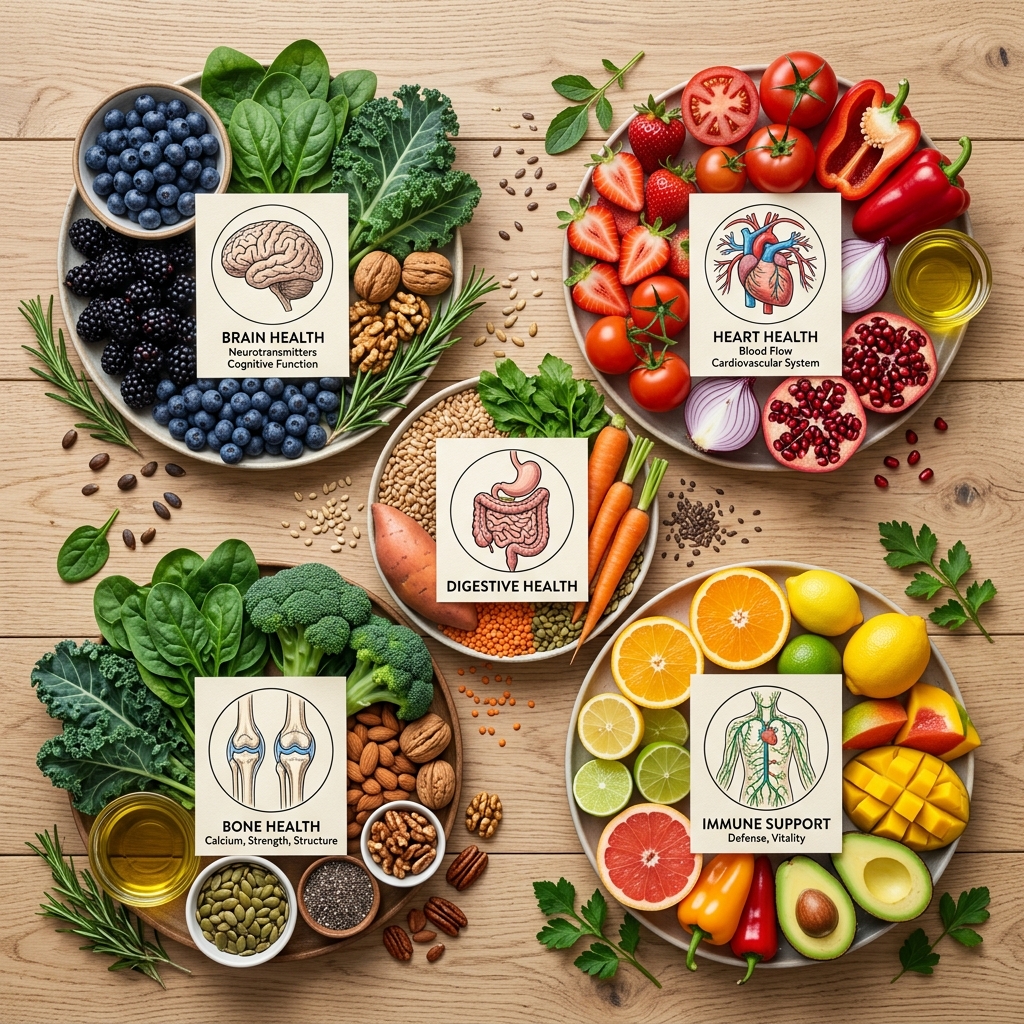
What is the Role of Vitamins? A Quick Guide to Nutritional Powerhouses
Vitamins are essential micronutrients—meaning your body needs them in small amounts—that act as catalysts for hundreds of bodily processes. They do not provide energy, but they are crucial for everything from nerve signal transmission and collagen synthesis to maintaining a robust immune response. Understanding which vitamins support specific organs (like the brain or heart) allows you to optimize your diet and proactively address potential deficiencies.
Why Are Vitamins So Important for Your Body?
Vitamins are organic compounds that our bodies cannot produce in sufficient quantities, making dietary intake paramount. They function as coenzymes, helping enzymes perform their jobs efficiently across multiple systems. A deficiency in even one vitamin can disrupt complex metabolic pathways, leading to noticeable health issues.
This guide consolidates the most critical vitamins and details their specific roles in maintaining optimal health for your brain, heart, bones, skin, and immune system.
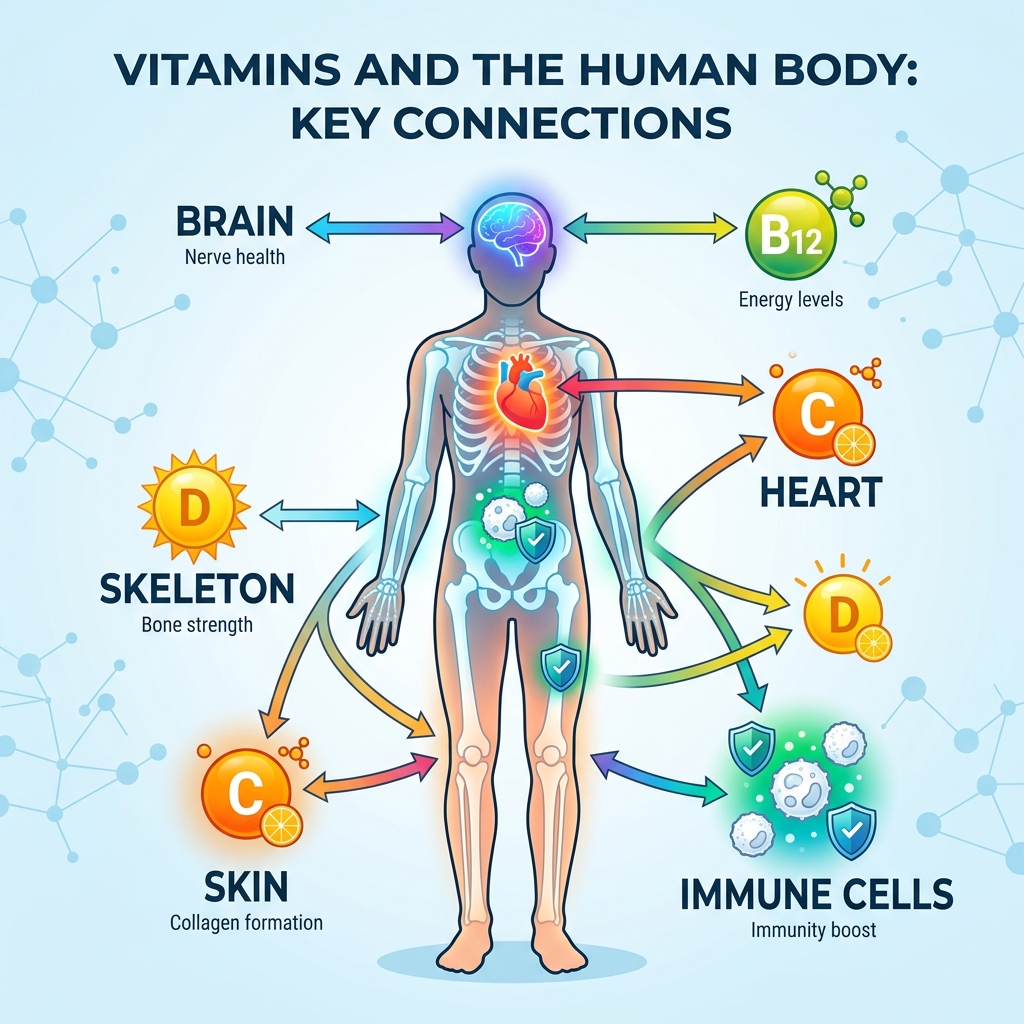
Vitamins for Cognitive Function: Fueling the Brain
The brain is an incredibly energy-intensive organ that requires constant support. Several vitamins are critical for maintaining myelin sheath integrity, regulating mood, and supporting memory function.
Vitamin B12 (Cobalamin)
- Primary Role: Essential for forming myelin—the protective coating around nerve fibers—and synthesizing neurotransmitters like dopamine and serotonin.
- Deficiency Risk: Can lead to neurological issues, cognitive decline, and severe fatigue.
- Best Sources: Animal products (meat, fish, eggs) are the richest sources. Vegans/vegetarians should rely on fortified foods or supplements.
Folate (Vitamin B9)
- Primary Role: Crucial for DNA synthesis and repair, which is vital for cell division and brain development. It also supports neurotransmitter production.
- Deficiency Risk: Can impair cognitive function and increase the risk of neural tube defects during pregnancy.
- Best Sources: Leafy green vegetables (spinach, kale), lentils, beans, and fortified grains.
Vitamin D
- Primary Role: While known for bones, adequate Vitamin D levels are linked to improved mood regulation and protection against neurodegenerative diseases.
- Deficiency Risk: Associated with increased risk of depression and cognitive decline.
- Best Sources: Sunlight exposure, fatty fish (salmon), and fortified dairy/cereals.
Vitamins for Cardiovascular Health: Protecting the Heart
The heart requires a steady supply of nutrients to maintain healthy blood pressure, manage cholesterol levels, and keep blood vessels flexible.
Vitamin C (Ascorbic Acid)
- Primary Role: A powerful antioxidant that protects delicate blood vessel walls from free radical damage. It also helps regulate blood pressure and supports collagen formation in connective tissues.
- Best Sources: Citrus fruits (oranges, lemons), berries (blueberries, strawberries), bell peppers, and broccoli.
Vitamin K
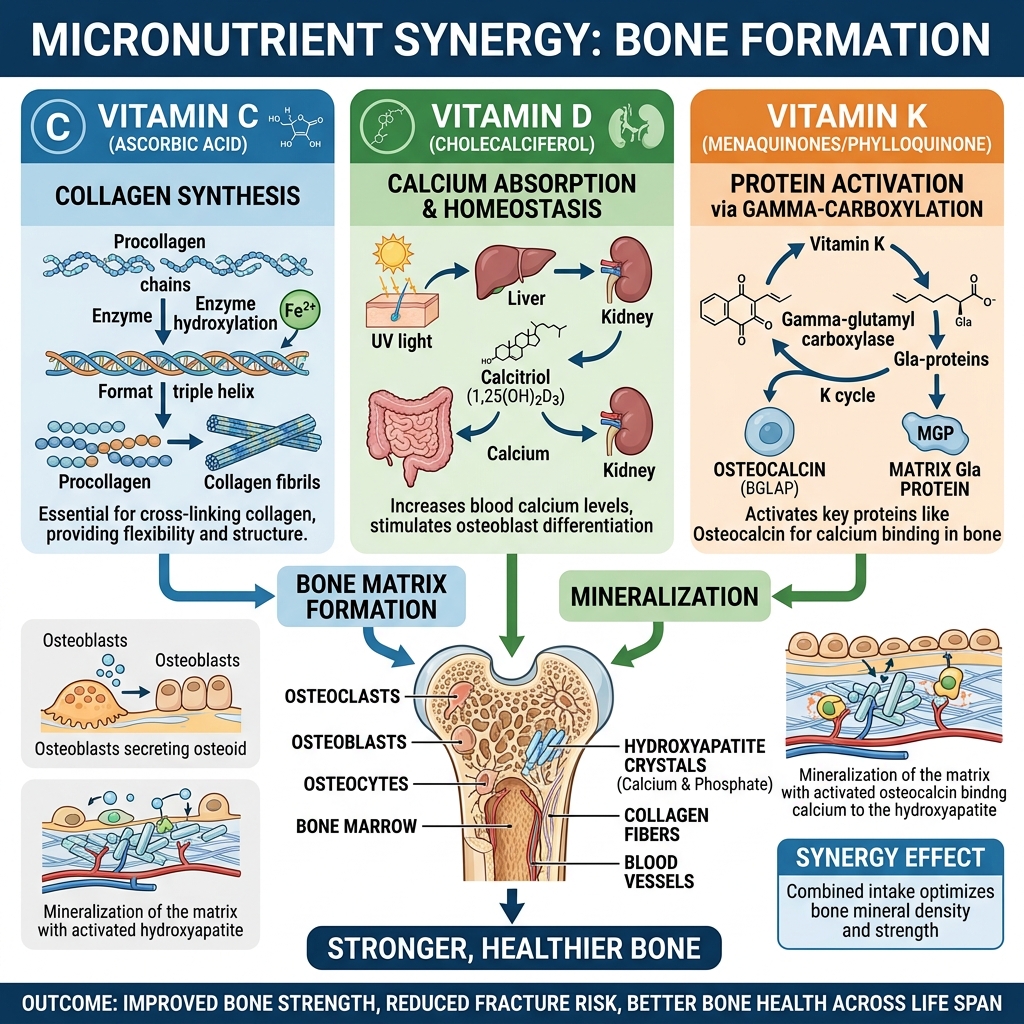
- Primary Role: Essential not only for proper blood clotting but also for preventing the buildup of calcium in the arteries (arterial calcification).
- Best Sources: Dark leafy greens (kale, spinach) and cruciferous vegetables (broccoli, cabbage). Note: Natto is an excellent source of Vitamin K2.
Niacin (Vitamin B3)
- Primary Role: Helps improve lipid profiles by potentially lowering LDL ("bad") cholesterol and raising HDL ("good") cholesterol. It also helps reduce triglycerides.
- Best Sources: Chicken, beef, peanuts, and fortified grains. Caution: High doses can cause flushing; consult a professional.
Vitamins for Structural Integrity: Bones, Skin, and Immunity
These vitamins work together to maintain the body's physical structure—from the skeleton to the outer skin layer—and its internal defense mechanisms.
Vitamin D & Calcium Synergy (Bone Health)
- The Partnership: Vitamin D is non-negotiable for bone health. It ensures that calcium, which provides structural strength, can be properly absorbed and utilized by the body.
- Sources: Sunlight exposure, fatty fish, fortified milk/yogurt.
Vitamin C & Collagen (Skin & Bones)
- The Role: Vitamin C is a critical cofactor for collagen synthesis. Since collagen is the primary structural protein in both bone matrix and skin dermis, adequate intake supports tissue repair and elasticity.
- Sources: Citrus fruits, bell peppers, and berries.
Vitamin A (Retinol) & Skin Turnover
- The Role: Essential for cell growth and differentiation. It regulates skin cell turnover, helping to maintain a healthy barrier function and promoting wound healing.
- Sources: Carrots, sweet potatoes, liver, and dark leafy greens (containing beta-carotene). Caution: Vitamin A supplements can be toxic in high doses.
Immune System Support (The Team Effort)
A strong immune system relies on multiple vitamins working together:
- Vitamin C: Stimulates the production and activity of white blood cells.
- Vitamin D: Regulates immune cell function, helping to activate T-cells and macrophages.
- Vitamin A: Maintains the integrity of mucous membranes, which serve as the body's first line of defense against pathogens.
- Vitamin E: Acts as a powerful antioxidant, protecting immune cells from damage caused by inflammation.
The Optimal Approach: Diet vs. Supplements
While supplements are useful for correcting diagnosed deficiencies or managing specific dietary restrictions, they should never replace a healthy diet.
Prioritize Whole Foods:
- Variety is Key: Eating a diverse "rainbow" of fruits and vegetables ensures you receive the full spectrum of vitamins and phytochemicals.
- Focus on Synergy: Pairing foods (e.g., Vitamin C-rich bell peppers with iron-rich beans) can enhance nutrient absorption.
When to Consider Supplements: Consulting a healthcare professional or Registered Dietitian is crucial before starting any supplement regimen. Supplementation may be necessary if:
- You have limited sun exposure (Vitamin D).
- You follow a restrictive diet (B12 for vegans).
- You are diagnosed with malabsorption issues.
Summary & Next Steps
Vitamins are not single-function miracle cures, but rather essential cofactors that enable complex biological processes across every system. By focusing on nutrient density and dietary variety, you can ensure your body receives the foundational support needed to thrive—from sharper cognitive function to stronger bones and a resilient immune system.
Disclaimer: This article is for informational purposes only and is not medical advice. Always consult with a qualified healthcare provider or Registered Dietitian before making changes to your diet or supplement routine.
Frequently Asked Questions
Are supplements better than food sources?
A balanced, varied diet is always the best source. Supplements should only be used to address specific deficiencies under professional medical guidance.
What are the most critical vitamins for overall health?
Vitamins D, C, B12, and K are often highlighted for their roles in bone strength, immunity, and cardiovascular function.
Sources
Medical Disclaimer: The information in this article is for educational purposes only and does not constitute medical advice. Always consult a qualified healthcare provider before making changes to your diet, exercise routine, or health regimen.