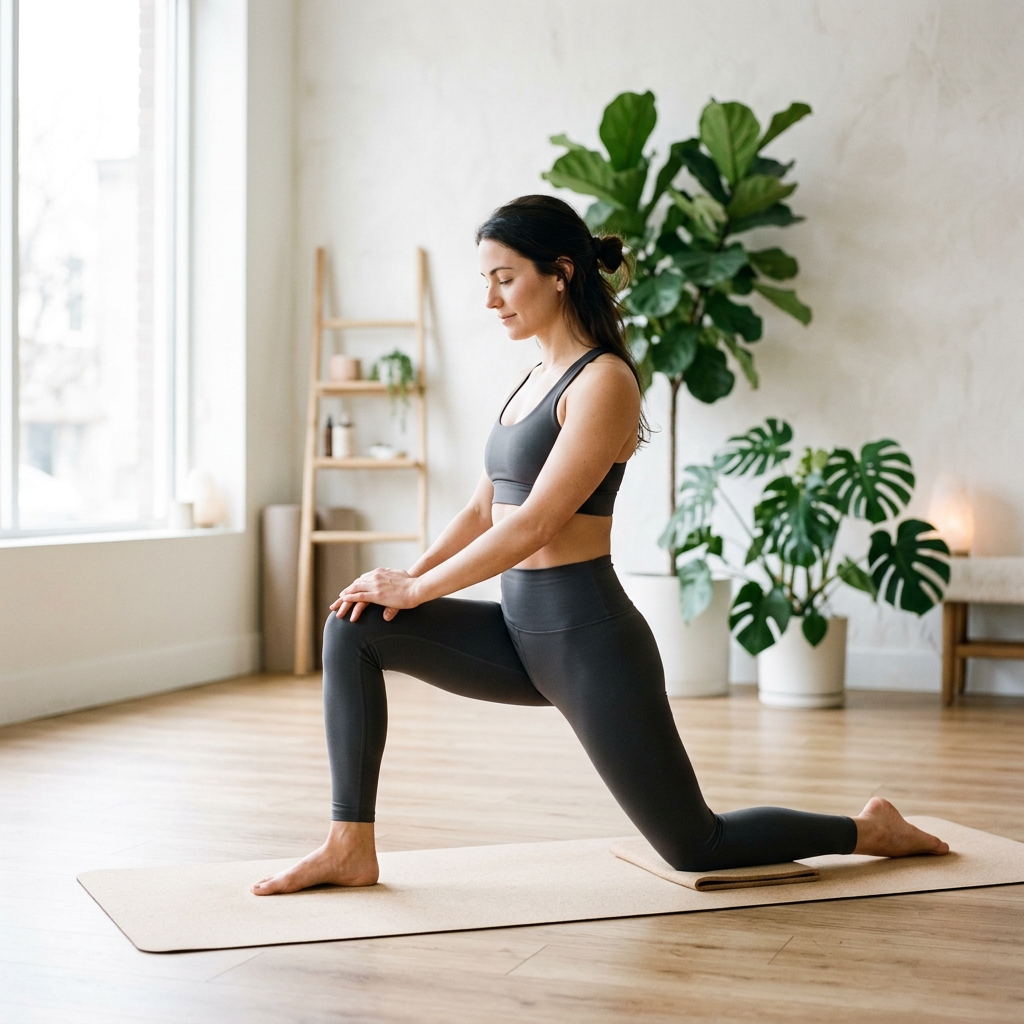
Sleeping in one position for hours can leave your joints stiff and muscles tight. A quick morning mobility routine helps lubricate your joints with synovial fluid, increases blood circulation, and signals to your nervous system that it's time to wake up.
Dynamic vs. Static Stretching
Static stretching (holding a stretch for 30+ seconds) has its place, but the morning calls for dynamic mobility. Dynamic stretches involve moving through a full range of motion repeatedly. This wakes up the neuromuscular connection without sedating the muscles.
The 10-Minute Sequence
Perform each of these movements for 60 seconds.
1. Cat-Cow (Spinal Warm-up)
Start on hands and knees. Inhale as you arch your back, dropping the belly and looking up (Cow). Exhale as you round your spine, tucking the chin and tailbone (Cat). Repeat fluidly.
2. World's Greatest Stretch (T-Spine & Hips)
From a high plank, step your right foot outside your right hand. Lower your left knee if needed. Lift your right hand and rotate your torso toward the right, reaching for the ceiling. Return to center and swap sides.
3. Deep Squat to Hamstring Stretch (Hips & Posterior Chain)
Stand with feet hip-width. Squat down as deep as comfortable, keeping heels on the floor. Grab your toes, and push your hips up toward the ceiling to stretch your hamstrings. Return to the deep squat and repeat.
4. 90/90 Hip Swivels (Hip Rotation)
Sit on the floor with knees bent at 90 degrees, feet wide. Drop both knees to the right so your legs form two 90-degree angles. Swing them over to the left. Continue swiveling back and deflection.
Frequently Asked Questions
Dynamic stretching is better. Moving joints through their range of motion increases blood flow and prepares muscles for activity, whereas static holding can decrease strength if done before movement.
Daily. Consistent short sessions are far more effective for long-term mobility than one long weekly session.