
What is Holistic Goal Setting?
Holistic goal setting is a powerful framework that moves beyond simple external achievements—like career milestones or financial targets. Instead, it focuses on creating a life of deep purpose by intentionally integrating all aspects of your being: mind, body, and spirit. This approach ensures that the goals you set are not just ambitious, but deeply resonant with who you truly are.
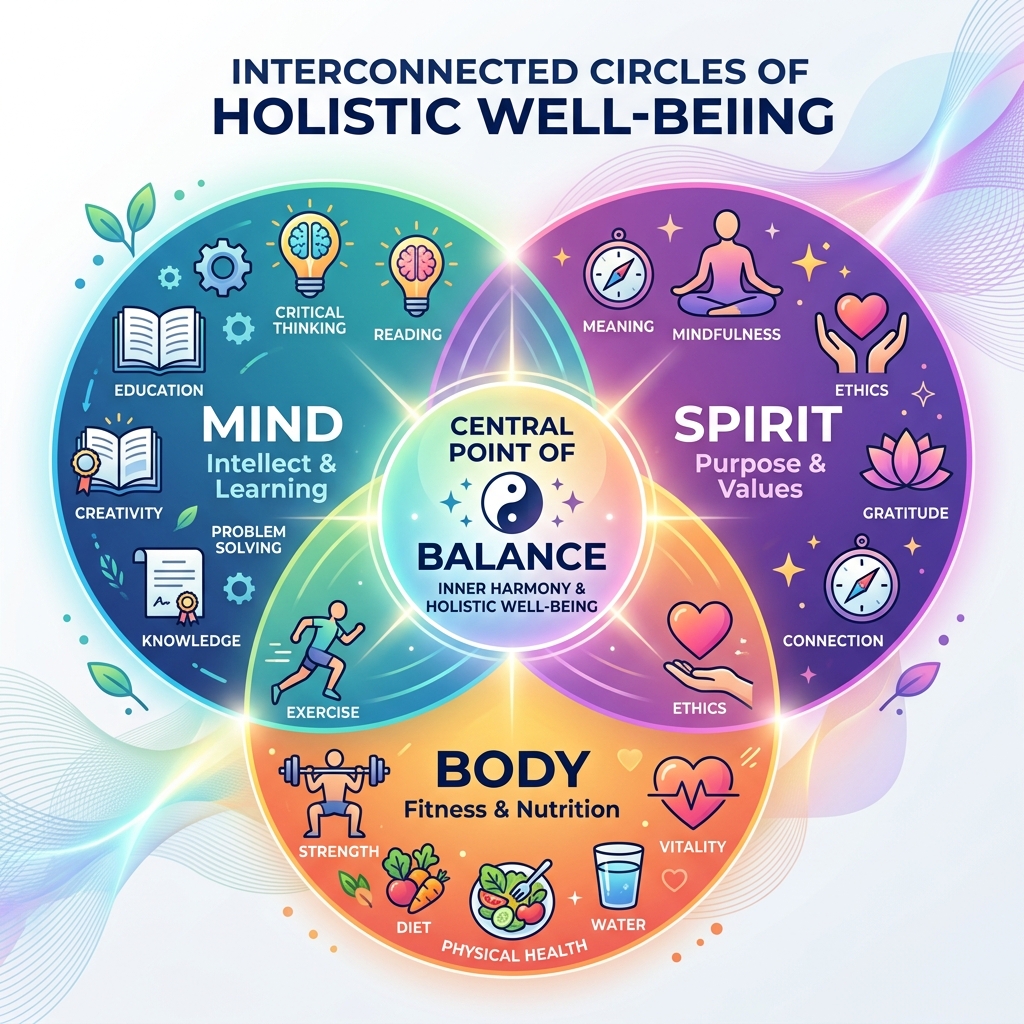
Traditional goal setting often leaves us feeling empty if our achievements don't align with our inner selves. Holistic goal setting, by contrast, requires you to build a life that is balanced and fulfilling across all dimensions—nurturing your physical health while simultaneously cultivating mental peace and spiritual purpose.
Why Does Aligning Goals with Your Values Matter?
When goals are set in isolation (e.g., only focusing on career success), they can lead to burnout, stress, and a profound sense of emptiness. By anchoring your objectives to your core values, you tap into intrinsic motivation—the deep desire to live authentically. This alignment provides sustained energy, resilience, and a powerful sense of meaning that external rewards alone cannot provide.
Key Benefits of Holistic Alignment:
- Increased Fulfillment: You feel purpose because your actions reflect what you believe is right and important.
- Improved Resilience: When setbacks occur, knowing why you are pursuing a goal (your values) gives you the strength to keep going.
- Better Life Balance: By addressing mind, body, and spirit equally, you prevent neglecting any crucial area of your well-being.
- Deeper Self-Awareness: The process forces deep reflection on your priorities, helping you understand who you are right now versus who you want to become.
How Do I Start Setting Holistic Goals? A Step-by-Step Guide
Achieving holistic balance requires a structured approach. Use these five steps to move from vague aspirations to actionable, meaningful goals.
1. Identify Your Core Values (The Foundation)
Your core values are the fundamental principles that guide your decisions and define what success means to you. They are not just "nice ideas"; they are non-negotiable guiding lights for your life.
Action Steps:
- Brainstorming: List 10–20 words that describe how you want to live (e.g., Integrity, Growth, Connection, Adventure, Health).
- Reflection: Consider times when you felt most fulfilled or proud. What values were being expressed in those moments? Conversely, what situations made you feel drained or angry? The answer often points to a violated value.
- Prioritize: Narrow your list down to your top 3–5 non-negotiable core values. These are the pillars of your life plan.
💡 Tip: Don't just name a value; define it. If "Kindness" is a value, what does that look like in practice? (e.g., “I will listen without interrupting and offer genuine support to my family.”)
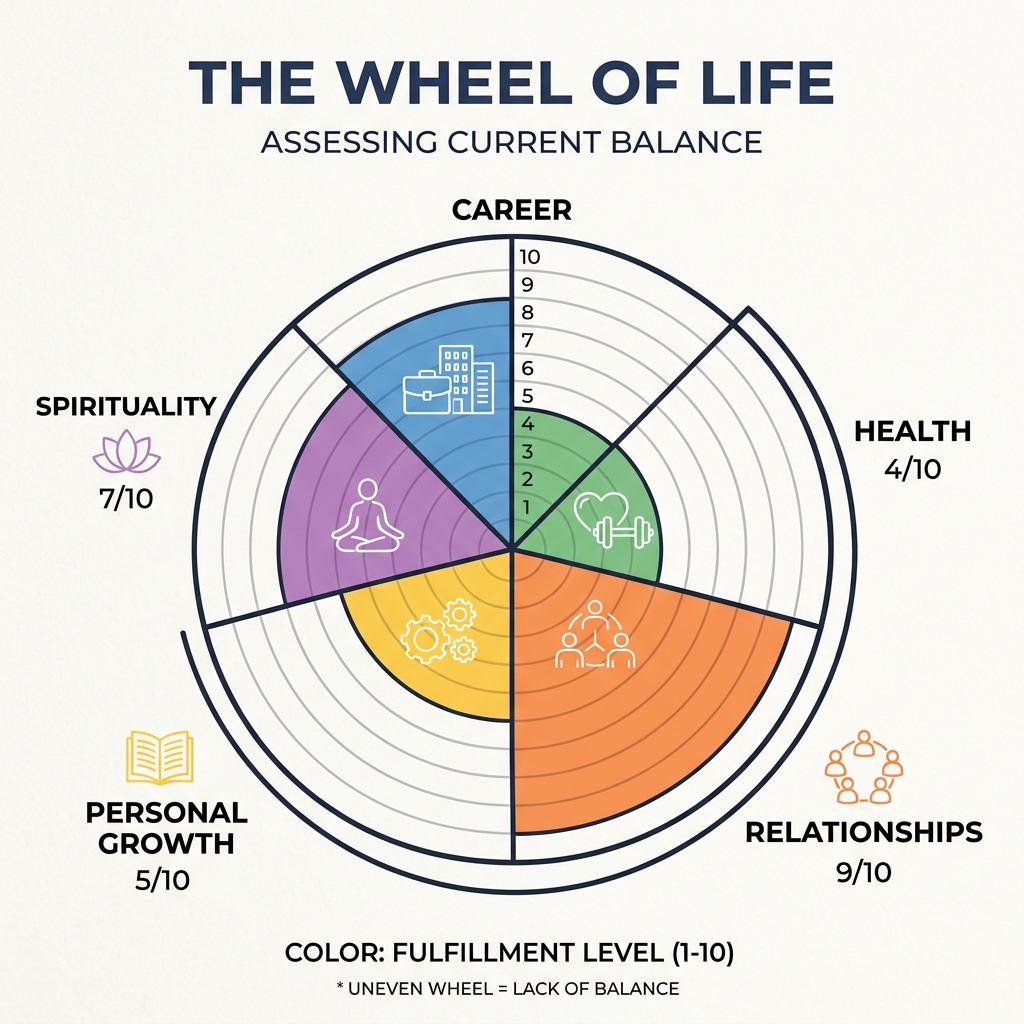
2. Assess Your Current State (The Audit)
Before setting goals, you must take an honest inventory of your current life across the three dimensions: Mind, Body, and Spirit. Use a "Wheel of Life" approach for this assessment.
Self-Assessment Questions:
- Mind/Intellect: Am I learning new skills? Do I dedicate time to reading or intellectual stimulation? Is my mental stress managed effectively?
- Body/Physical Health: Am I sleeping 7–9 hours consistently? Am I eating nutritious food most days? Am I moving my body regularly?
- Spirit/Purpose: Do I feel connected to something larger than myself (community, nature, faith)? Does my daily routine reflect my deepest values?
3. Set SMART Goals Aligned with Values (The Strategy)
Once you know your values and where the gaps are, apply the SMART framework to create specific objectives. Crucially, every goal must trace back to one of your core values.
- S - Specific: What exactly will I do? (Vague: "Be healthier." Specific: "Walk 30 minutes.")
- M - Measurable: How will I track progress? ("I will walk 3 times a week for 30 minutes, tracked on my fitness app.")
- A - Achievable: Is this realistic given my current life demands? (Don't aim to run a marathon if you haven't exercised in years.)
- R - Relevant: Does this goal truly align with one of my top 3 core values? (If your value is "Family," running a marathon might be irrelevant right now.)
- T - Time-Bound: When will I achieve this by? (Setting a deadline creates urgency and accountability.)
4. Create an Action Plan (The Roadmap)
A goal without a plan is merely a wish. Break your SMART goals down into micro-actions that can be completed daily or weekly.
Elements of a Robust Action Plan:
- Milestones: Divide the large goal into smaller, achievable checkpoints. Celebrate these small wins!
- Resources Needed: Identify what you need (e.g., $50 for new running shoes, 1 hour of dedicated time).
- Obstacle Planning: Anticipate failure points. If "lack of time" is an obstacle, the solution might be to schedule a non-negotiable 20-minute block in your calendar.
- Accountability Partner: Share your goals with someone who will check in on you regularly.
5. Review and Adjust (The Maintenance)
Life changes, and therefore, your goals must change too. Schedule regular "review dates" (monthly or quarterly). Ask yourself:
- Are these goals still aligned with my values?
- Am I making consistent progress?
- What parts of the plan are causing unnecessary stress or friction?
Focus on Progress, Not Perfection. If you miss a day at the gym or skip meditation, do not view it as failure. View it as data: “I missed this because I was too tired.” Then, adjust your plan to account for that reality.
Summary & Next Steps
Holistic goal setting is the practice of living intentionally—ensuring that every action you take moves you closer to a life defined by purpose and balance. Start small, focus on identifying your core values first, and build outwards from there. Remember that the journey itself, filled with self-discovery and consistent effort, is where true fulfillment lies.
Sources & Further Reading:
- The 7 Habits of Highly Effective People by Stephen Covey: Focuses heavily on principle-centered living and alignment.
- Atomic Habits by James Clear: Provides practical frameworks for building the small, consistent habits necessary to achieve goals.
- Man's Search for Meaning by Viktor Frankl: A foundational text on finding meaning even in extreme adversity.
Frequently Asked Questions (FAQ)
Q: Is holistic goal setting harder than just setting a SMART goal? A: Yes, it requires more self-reflection upfront. While SMART goals focus on how to achieve something, holistic goal setting forces you to ask why you are achieving it, ensuring the effort is meaningful and sustainable.
Q: What if my career goals conflict with my spiritual values? A: This is a common challenge. You must re-evaluate your definition of "success." If your value is 'Community,' perhaps a high-paying corporate job that isolates you conflicts with that value, suggesting you need to find a role that integrates service or connection.
Frequently Asked Questions
Goal setting defines *what* you want to achieve (e.g., run a marathon). Value alignment ensures that *why* you are doing it (your core values, like 'health' or 'community') gives your actions meaning and purpose.