What Exactly Is Pranayama?
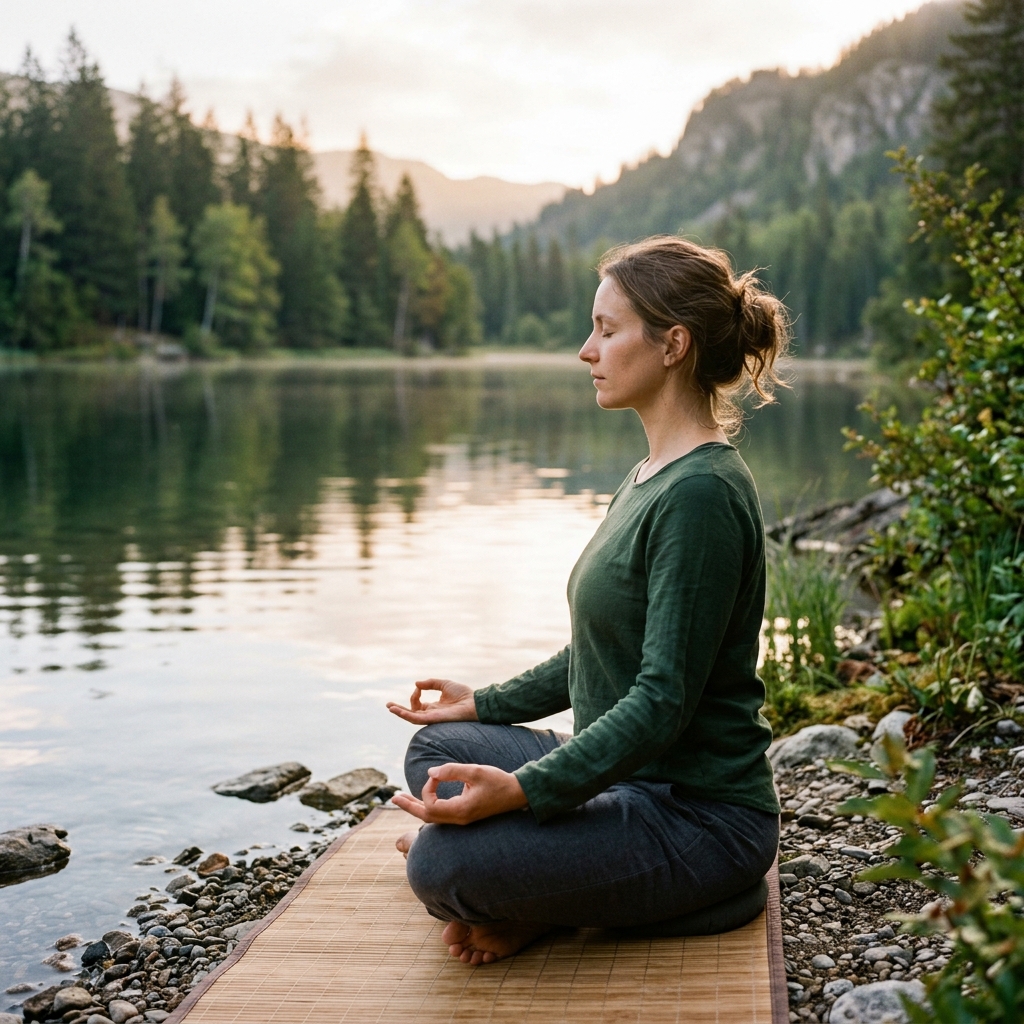
Pranayama is an ancient yogic discipline defined as the conscious control, extension, and regulation of prana, or vital life force energy. It is a powerful mind-body technique that teaches you to use your breath—the most constant function of life—to directly influence your autonomic nervous system (ANS). By mastering controlled breathing, practitioners can shift from a state of stress and anxiety to one of deep calm and balance.
Why Does Breathwork Impact Your Nervous System?
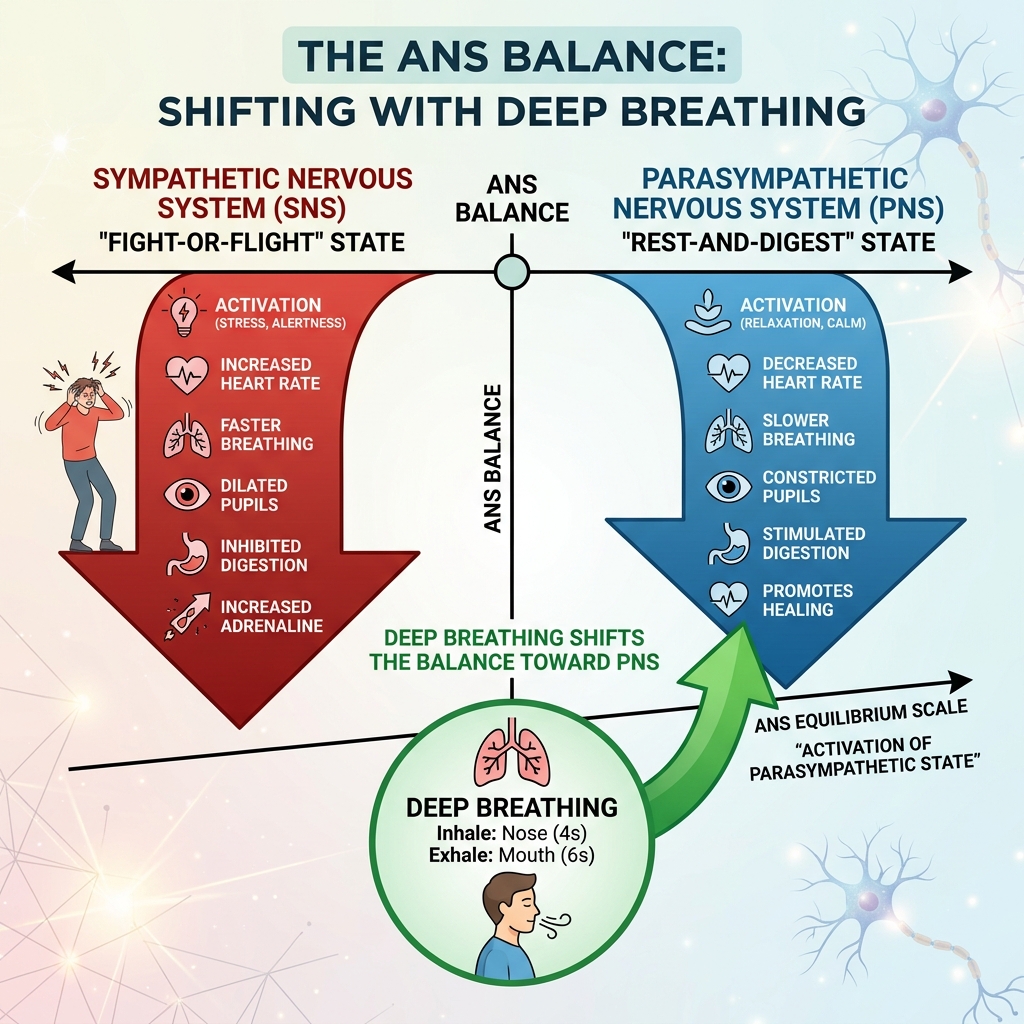
To understand the power of Pranayama, it is essential to know how our breath connects to our internal regulatory systems. The ANS manages involuntary functions like heart rate and digestion, operating through two main branches:
- Sympathetic Nervous System (SNS): This is the "fight-or-flight" response. It activates during stress, causing increased heart rate, elevated blood pressure, and heightened alertness—the body's alarm system.
- Parasympathetic Nervous System (PNS): This is the "rest-and-digest" response. It promotes deep relaxation, slows the heart rate, lowers blood pressure, and aids in recovery.
When we are chronically stressed, our SNS remains overactive. Pranayama works by deliberately slowing and deepening the breath, which sends a physical signal to the brain that it is safe to relax. This action directly stimulates the PNS, effectively "hacking" your nervous system back into balance.
Key Physiological Benefits of Deep Breathing
Regular practice leads to measurable physical and mental improvements, including:
- Reduced Stress Hormones: Slow exhalation activates the vagus nerve, promoting the release of calming neurotransmitters.
- Lowered Blood Pressure: Consistent deep breathing helps relax blood vessels throughout the body.
- Improved Oxygenation: Techniques like Dirga Pranayama maximize lung capacity and oxygen intake.
- Enhanced Focus: By requiring intense concentration on the breath, pranayama trains the mind to quiet mental chatter.
How Can I Start Practicing Pranayama?
Pranayama is highly adaptable and can be practiced anywhere—at your desk, before bed, or during a commute. Here are three foundational techniques perfect for beginners:
1. Dirga Pranayama (Three-Part Breath)
This technique teaches you to utilize the full capacity of your lungs by consciously directing breath into all three areas: abdomen, rib cage, and chest.
How to Practice:
- Find a comfortable seated position with a straight spine.
- Place one hand on your belly and the other on your ribs/chest.
- Inhale: Slowly fill the breath first into the abdomen (belly rises), then expand into the rib cage, and finally lift the upper chest.
- Exhale: Release the air in reverse order: Chest, Rib Cage, and finally, completely emptying the abdomen.
- Repeat this full cycle for 5–10 minutes, maintaining a smooth, steady rhythm.
2. Ujjayi Breath (Ocean Breath)
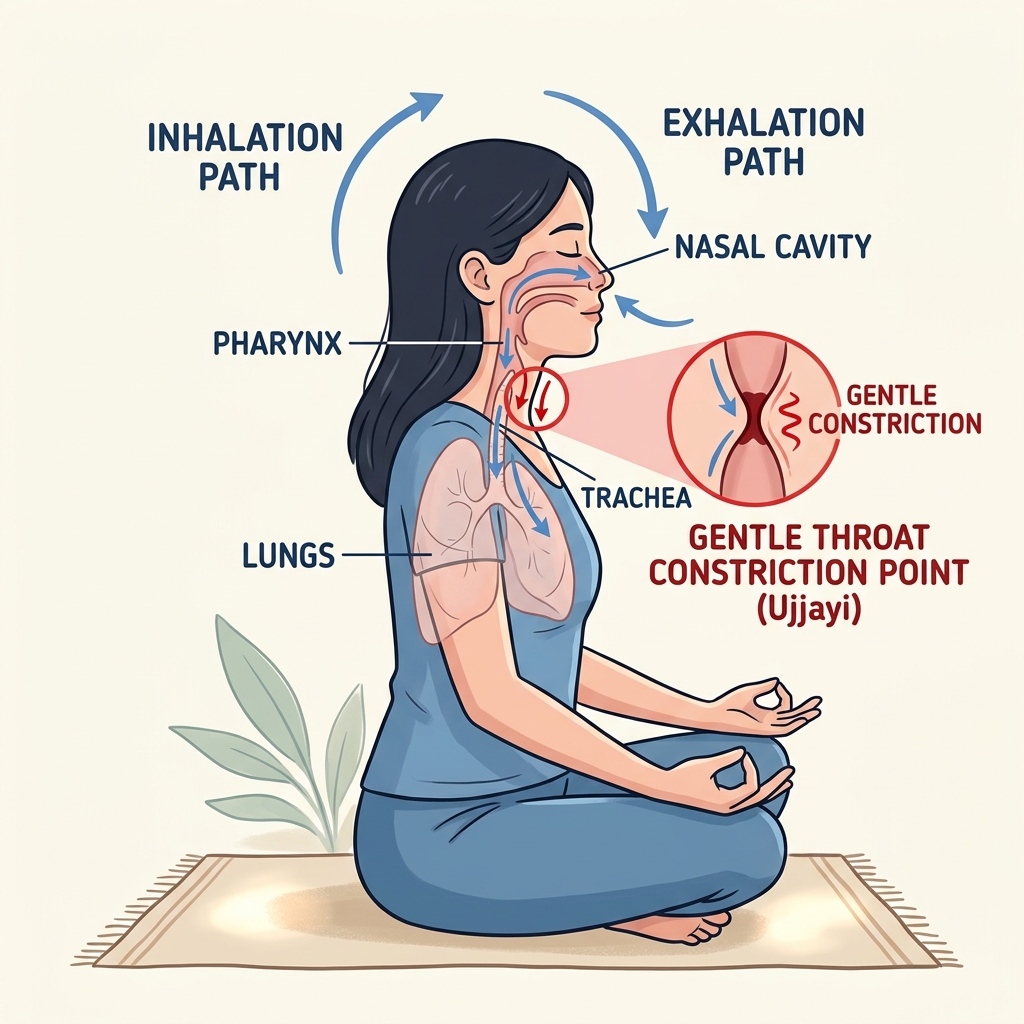
Ujjayi is characterized by a soft, audible constriction in the back of the throat that creates an ocean-like sound with every breath. This rhythmic focus helps anchor the mind and generate internal warmth.
How to Practice:
- Sit comfortably with relaxed shoulders.
- Simulate gently fogging up a mirror with your mouth open; feel this gentle constriction in your throat.
- Close your mouth and maintain that subtle constriction while breathing through your nose.
- Inhale slowly, maintaining the sound. Exhale slowly, maintaining the sound.
- Focus solely on the steady rhythm and the audible "ocean" sound. Practice for 5–10 minutes.
3. Nadi Shodhana (Alternate Nostril Breathing)
This powerful technique balances the left and right hemispheres of the brain, promoting mental equilibrium and reducing emotional volatility. It is ideal for calming the nervous system before sleep or during periods of high stress.
How to Practice:
- Sit comfortably with a straight spine. Use your right hand: index finger on the right nostril, ring finger on the left nostril.
- Close the right nostril with your thumb. Inhale slowly through the left nostril.
- Close the left nostril with your ring finger (both nostrils closed). Release the thumb and exhale completely through the right nostril.
- Inhale slowly through the right nostril.
- Close the right nostril with your thumb. Release the ring finger and exhale completely through the left nostril.
- This completes one round. Continue alternating for 5–10 minutes, always prioritizing a smooth, even rhythm.
Integrating Breathwork into Daily Life
The most effective way to practice Pranayama is to make it a habit that fits your life, not just a dedicated yoga session. Incorporating conscious breathing can provide immediate relief:
- Morning Routine: Start the day with 5 minutes of Nadi Shodhana to balance energy and set a focused tone for the day ahead.
- Desk Breaks: When feeling overwhelmed or stressed at work, take three rounds of deep belly breaths (Dirga Pranayama) to reset your nervous system quickly.
- Commute Time: Use Ujjayi breath while sitting in traffic or waiting—the rhythmic sound acts as a natural focus point, reducing anxiety.
- Before Sleep: Practice slow, deep abdominal breathing for 10 minutes before bed. This signals safety to the body and promotes deeper, more restful sleep cycles.
Summary: Your Path to Calm
Pranayama is not merely an exercise; it is a profound tool for self-regulation. By understanding the link between breath and the autonomic nervous system, you gain direct control over your stress response. Consistent practice of these simple techniques will lead to long-term benefits, including improved emotional stability, enhanced focus, and better cardiovascular health.
Start small—even five minutes a day can make a significant difference in how you feel, think, and respond to the stresses of modern life. Take a deep breath, center yourself, and begin your journey toward mastering the rhythm of your own breath.
Frequently Asked Questions
Start with 5 to 10 minutes daily. Consistency is more important than duration.