How Does Yoga Help Reduce Stress and Anxiety?
Yoga offers a powerful, holistic pathway to managing stress by directly addressing the mind-body connection. It teaches you how to use conscious breathing (pranayama) and mindful movement to shift your body out of the chronic "fight-or-flight" state. By activating the parasympathetic nervous system (PNS), yoga helps lower stress hormones like cortisol, promoting deep physical and mental calm.
Understanding Stress: The Physiological Impact on the Body
Stress is not just a feeling; it is a physical response that affects every system in your body. In modern life, chronic stress—from work pressure to constant connectivity—keeps our bodies perpetually ready for danger, leading to burnout and anxiety.
What Happens When We Are Chronically Stressed?
When the perceived threat is ongoing (like meeting deadlines or dealing with financial worries), the body releases stress hormones, most notably cortisol. While cortisol provides necessary energy in short bursts, chronic elevation leads to systemic issues:
- Hormonal Imbalance: Sustained high cortisol levels disrupt sleep cycles and can contribute to weight gain, particularly around the abdomen.
- Nervous System Overdrive: The sympathetic nervous system (SNS) remains activated, keeping your heart rate elevated and muscles tense—a state of constant alert that is exhausting over time.
- Immune Suppression: Chronic stress weakens the immune response, making you more susceptible to illness.
How Does Yoga Counteract Stress Hormones?
Yoga acts as a natural regulator for this system. By focusing on slow, deliberate movements and deep breathing, you signal to your brain that you are safe. This conscious shift helps downregulate cortisol levels and gently guides the body back into balance.
Activating the Parasympathetic Nervous System (PNS)
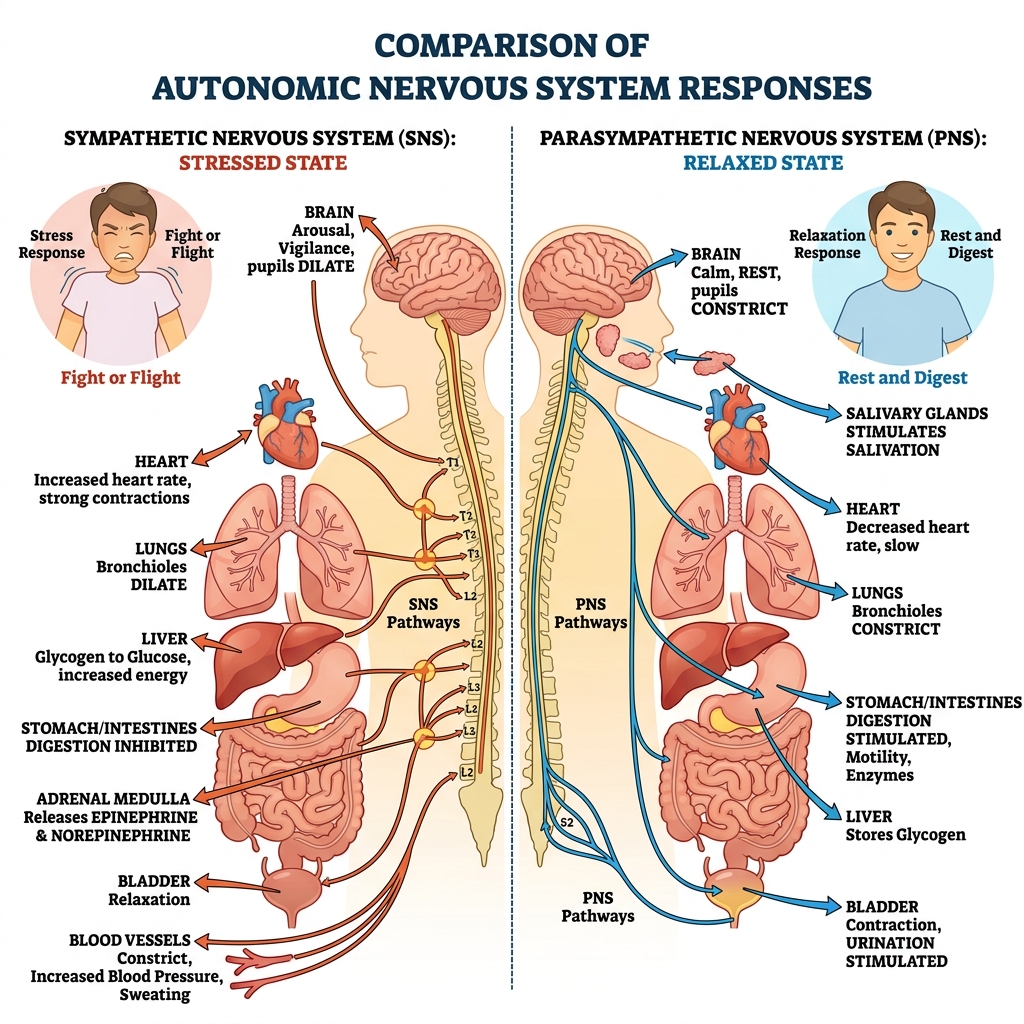
The key mechanism in yoga's stress-relief power is the activation of the Parasympathetic Nervous System (PNS).
- SNS (Sympathetic): The accelerator pedal; responsible for "fight or flight."
- PNS (Parasympathetic): The brake pedal; responsible for "rest and digest," healing, and recovery.
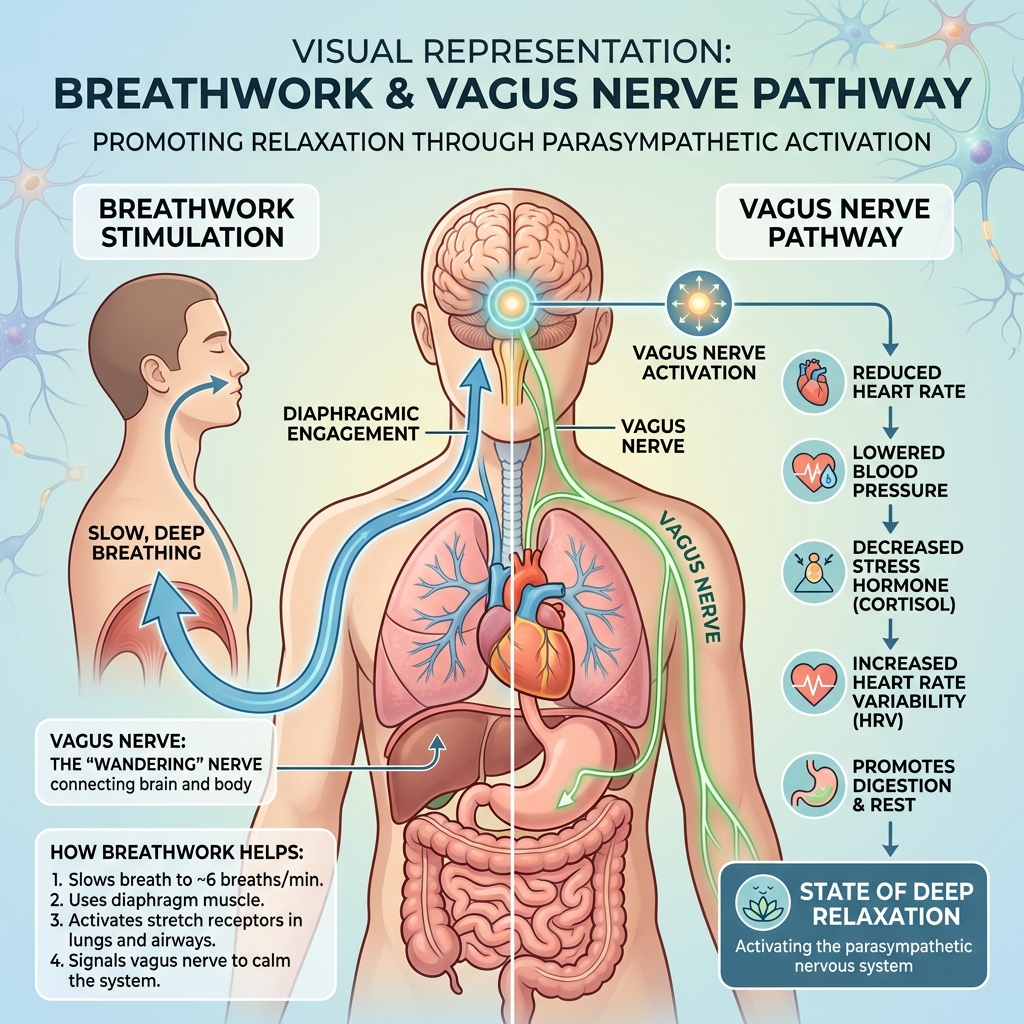
When you practice yoga, you are intentionally engaging the PNS. This activation slows your heart rate, lowers blood pressure, and tells your body that it is safe to relax and heal.
🧘♀️ Core Techniques: Breathing (Pranayama)
Breathwork is arguably the most powerful tool in a yogic practice because breathing directly influences the vagus nerve—the main communication line between your brain and your organs. Learning to control your breath gives you an immediate, portable way to calm down anywhere.
- Diaphragmatic Breathing (Belly Breathing): Focus on expanding the belly fully during inhalation and contracting it slowly during exhalation. This deep, rhythmic breathing immediately signals safety to the nervous system.
- Ujjayi Breath (Ocean Breath): Creating a soft constriction in the throat while breathing helps focus the mind and generates internal heat, which is deeply meditative.
- Nadi Shodhana (Alternate Nostril Breathing): By balancing breath through both nostrils, this technique is highly effective at balancing the nervous system, reducing anxiety, and improving mental clarity.
Mindful Movement: Grounding Through Asanas
Yoga poses, or asanas, are not just physical stretches; they are opportunities for mindfulness in motion. When we are anxious, our minds tend to spiral into worries about the past or future. Mindful movement anchors us firmly in the present moment.
🧘♀️ Best Poses for Stress and Anxiety Relief
Incorporating these poses into your routine can help release physical tension that often stores emotional stress:
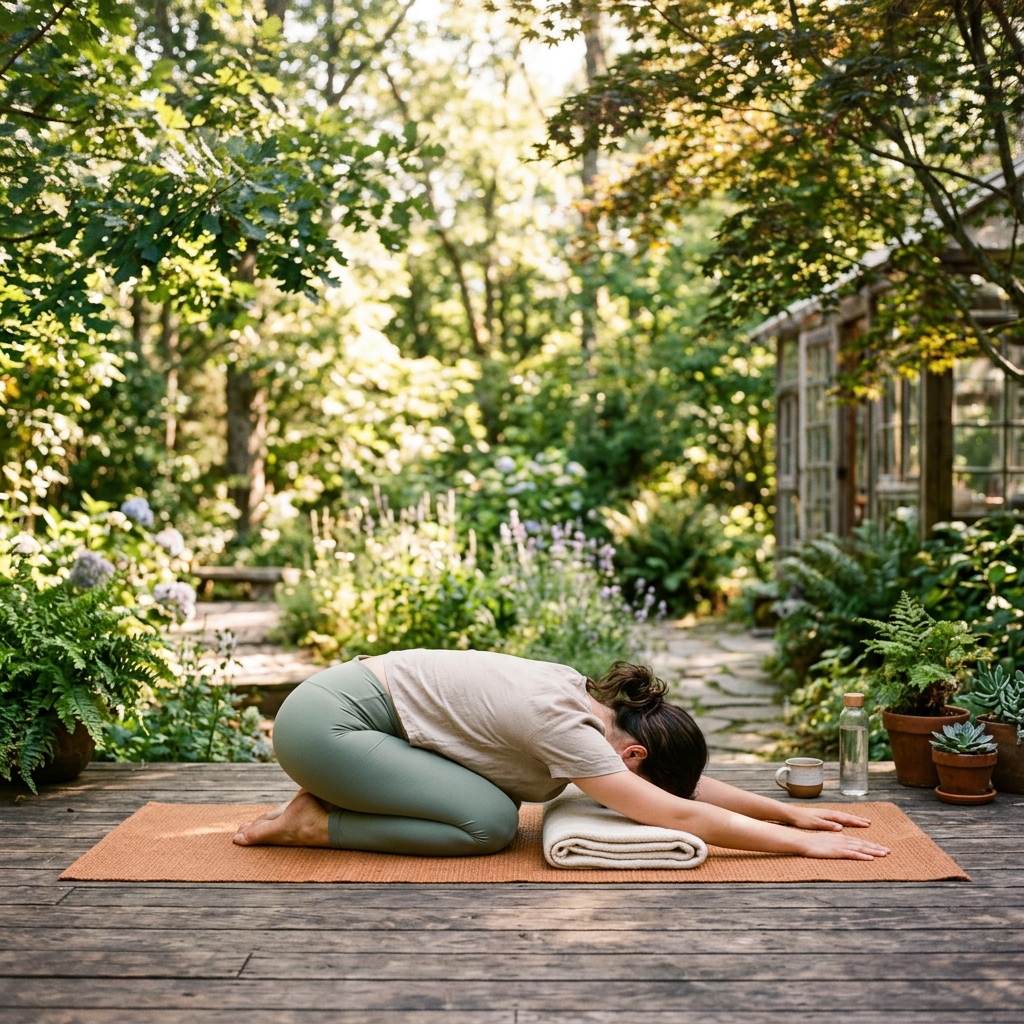
- Child's Pose (Balasana): This is a deeply restorative pose that gently stretches the hips, knees, and ankles while calming the mind. It promotes feelings of safety and grounding.
- Forward Folds (Uttanasana): By bending forward, you encourage relaxation in the back muscles and help calm the nervous system. It’s excellent for releasing physical tension held in the lower back.
- Hip Openers (e.g., Pigeon Pose): The hips are often linked to emotional processing. Opening these areas can physically help release pent-up emotions and reduce chronic tightness associated with stress.
- Gentle Twists: Spinal twists improve digestion and mobility while encouraging a sense of release and detoxification, helping the body process tension.
Deep Relaxation: Savasana and Yoga Nidra
The practice doesn't end when you leave your mat. The final stages are crucial for integrating the benefits of the session.
😴 Savasana (Corpse Pose)
Savasana is not merely lying down; it is an active process of conscious surrender. By remaining still and observing the sensation of relaxation, you allow your body to fully integrate the calming effects of the practice. It gives the nervous system time to shift from "alert" mode to deep rest.
🌌 Yoga Nidra (Yogic Sleep)
Yoga Nidra is a guided meditation that takes you into a state between wakefulness and sleep—a profound, restorative state. This technique allows the mind and body to process stress and trauma without the need for physical effort. It has been scientifically shown to improve focus, reduce anxiety symptoms, and enhance overall well-being.
Building Your Stress Management Routine
Integrating yoga doesn't require hours of intense practice; consistency is key. Start by dedicating 10–15 minutes a day to these foundational habits:
- Start with Breath: Begin every session with five minutes of diaphragmatic breathing. This immediately signals calm to your body.
- Move Mindfully: Choose one or two restorative poses (like Child's Pose and gentle twists) and hold them for several breaths, focusing only on the sensation in your muscles.
- End with Stillness: Finish every session with a dedicated period of Savasana, allowing yourself to fully rest and absorb the benefits.
Summary & Next Steps
Yoga provides an accessible, evidence-based tool for managing stress by directly addressing the mind-body connection. By mastering techniques like breathwork and mindful movement, you gain control over your autonomic nervous system, shifting from a state of chronic alarm to one of deep rest and recovery. Make time for your mat—it is an investment in your most vital resource: your peace of mind.
Sources & Further Reading:
- Harvard Medical School - Yoga for anxiety and depression
- National Center for Complementary and Integrative Health (NCCIH) - Yoga: What You Need To Know
- American Psychological Association - Stress Management Tools
Frequently Asked Questions
Yes, gentle forms like Hatha or Yin yoga are excellent starting points. Always listen to your body and consult a professional if you have chronic conditions.