What is Yoga, and How Do I Choose the Right Style?
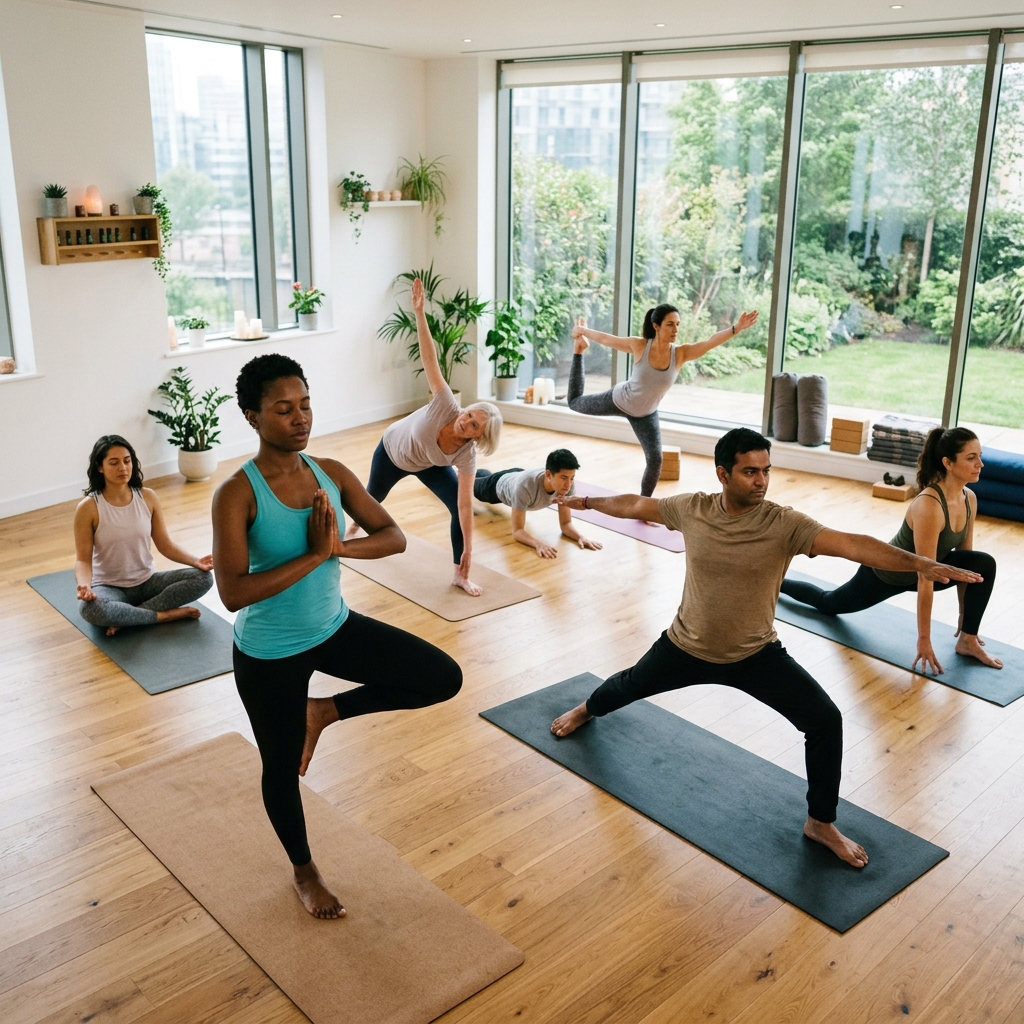
Yoga is not a single practice but an umbrella term encompassing thousands of techniques designed to unite mind, body, and spirit. Because it is so diverse, choosing a style can be overwhelming. The best approach is to select a style that aligns with your current fitness level and primary goal. For beginners seeking gentle movement and foundational strength, Hatha or Restorative yoga are ideal starting points. If you seek intense cardio and building heat, Vinyasa or Ashtanga may be better suited.
Understanding the Core Styles of Yoga
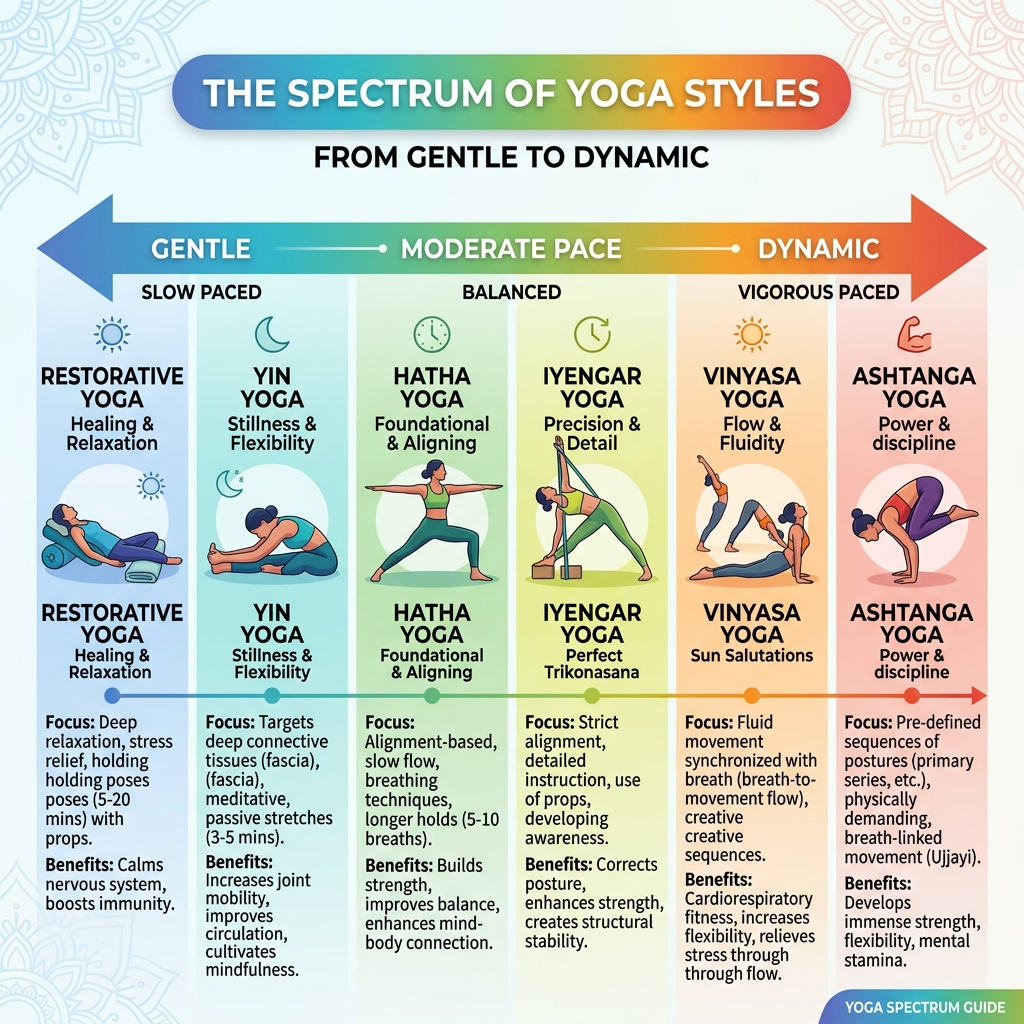
While all forms of yoga share the goal of promoting physical and mental well-being, they differ significantly in their focus—whether it's deep stretching, continuous movement, or meditative breathwork. Here is a detailed breakdown of the most popular styles:
Hatha Yoga: The Gentle Foundation
Hatha is often misunderstood as just "gentle yoga," but it serves as an excellent foundational practice for all levels. It focuses on holding basic postures (asanas) and coordinating them with controlled breathing, giving students time to master alignment.
- What to Expect: Longer holds in fundamental poses; detailed instruction on proper form.
- Best For: Beginners, individuals recovering from minor injuries, or anyone seeking a steady, foundational practice to build body awareness.
- Key Benefits: Improves flexibility and balance; reduces stress through mindful breathing.
Vinyasa Yoga: The Dynamic Flow
Vinyasa translates roughly to "to place in a sequence" and is perhaps the most popular style globally. It links movement directly to breath, creating a continuous, flowing experience often referred to as "flow yoga."
- What to Expect: A dynamic series of poses (like Sun Salutations) where you move continuously from one position to the next on an inhale or exhale.
- Best For: Individuals who enjoy a cardiovascular workout, those seeking to build strength and endurance, and anyone looking for an invigorating session.
- Key Benefits: Builds heat in the body; improves cardiovascular health; enhances coordination and stamina.
Ashtanga Yoga: The Structured Challenge
Ashtanga is highly structured and rigorous, following a specific sequence of poses that has been practiced for decades. It demands discipline and consistency.
- What to Expect: A fixed series of challenging postures performed in the exact same order every time. This structure allows practitioners to track progress intensely.
- Best For: Experienced practitioners who thrive on routine, those seeking a deep physical challenge, and individuals aiming for serious strength gains.
- Caution: Due to its intensity, it is highly recommended that beginners start with Hatha or Vinyasa before attempting Ashtanga.
Iyengar Yoga: Precision and Alignment Mastery
Iyengar yoga is renowned for its meticulous focus on precise anatomical alignment. It heavily utilizes props—such as blocks, straps, blankets, and bolsters—to ensure every student can safely access the correct form of a pose.
- What to Expect: Slow, deliberate movements with detailed verbal cues and physical adjustments from the instructor. Props are integral to supporting the body in challenging positions.
- Best For: Individuals with physical limitations or chronic injuries, those who prioritize perfect alignment over speed, and anyone seeking deep anatomical understanding.
- Key Benefits: Improves posture dramatically; increases body awareness; highly therapeutic for joint health.
Kundalini Yoga: Awakening Energy and Mind
This powerful practice is less about physical poses and more about awakening the Kundalini energy, believed to reside at the base of the spine. It combines intense breathwork (pranayama), chanting (mantra), postures, and meditation.
- What to Expect: Dynamic movements combined with specific breathing techniques and vocalization. Classes are designed to be transformative and energizing on a mental level.
- Best For: Individuals seeking a spiritual or energetic practice, those looking to reduce chronic stress and anxiety, and anyone interested in breathwork mastery.
- Key Benefits: Boosts energy levels; enhances mental clarity; promotes spiritual connection.
Restorative Yoga: Deep Relaxation and Recovery
Restorative yoga is the ultimate antidote to modern stress. It involves holding passive poses for extended periods (5–20 minutes), with the body fully supported by props. The goal is deep rest, not effort.
- What to Expect: Gentle, deeply supported stretches where you simply allow gravity and props to hold your body in a state of complete relaxation.
- Best For: Individuals suffering from high stress, anxiety, or fatigue, those needing physical recovery, and anyone seeking improved sleep quality.
- Key Benefits: Activates the parasympathetic nervous system (rest-and-digest); lowers blood pressure; promotes deep emotional release.
Yin Yoga: Targeting Connective Tissue
Yin yoga is a slow, meditative practice that focuses on stretching the deep connective tissues—the fascia—rather than just the muscles. Poses are held for long durations (3–5 minutes or more).
- What to Expect: Passive stretches, often seated or lying down, targeting joints like the hips and knees. The focus is on patience and deep internal sensation.
- Best For: Those seeking increased joint mobility, improving flexibility in connective tissues, and anyone who enjoys a meditative, calming experience.
- Key Benefits: Increases joint range of motion; calms the nervous system; promotes emotional release through stillness.
How to Choose Your Path: A Quick Guide
To help narrow down your options, consider which outcome you prioritize most right now:
| If your goal is... | Try this style... | Why? |
|---|---|---|
| Starting out / Gentle movement | Hatha or Restorative | Focuses on foundational poses and safety first. |
| Building strength & cardio | Vinyasa or Ashtanga | Requires continuous, dynamic effort and heat generation. |
| Improving posture/healing injuries | Iyengar | Uses props to ensure perfect alignment regardless of current flexibility. |
| Reducing stress / Sleep issues | Restorative or Yin | Focuses on deep relaxation and passive stretching. |
| Boosting energy / Spiritual growth | Kundalini | Combines breathwork, mantra, and movement for an energetic lift. |
Tips for a Successful Yoga Journey
- Listen to Your Body: Never push into pain. Modify poses or take breaks when needed. Pain is a signal to stop; discomfort is part of the stretch.
- Prioritize Breath (Pranayama): Remember that breath is your anchor. If you lose focus on your breathing, you are likely over-stretching or moving too fast.
- Try Everything: The best way to find your "flow" is through exploration. Most studios offer introductory classes—take advantage of them!
Summary & Next Steps
Yoga is a deeply personal journey of self-discovery. There is no single "best" style; there is only the right style for you right now. By understanding the unique focus of Hatha, Vinyasa, Yin, and others, you can make an informed choice that supports your physical goals, whether they are building strength or finding deep calm.
Start by committing to a few classes in one or two styles (like Hatha and Restorative) to see how your body responds. Consistency is more important than intensity when beginning this practice. Take a deep breath, step onto your mat, and enjoy the journey of connecting mind, body, and spirit!
Frequently Asked Questions
Yes. Styles like Iyengar and Restorative are excellent because they focus on alignment and gentle support, but always consult a physical therapist or doctor first.
Begin with Hatha or Restorative yoga. These foundational styles help you build awareness of your body and breath without overwhelming intensity.