What is Yoga for Athletes?
Yoga is far more than just stretching; it is a holistic system of physical postures, breathing techniques (Pranayama), and meditation designed to improve the mind-body connection. For athletes, integrating yoga provides a powerful, low-impact method to achieve a competitive edge by enhancing flexibility, building deep core strength, improving balance, and accelerating overall recovery. It teaches the body how to move efficiently while simultaneously strengthening the stabilizing muscles often neglected during intense sport-specific training.
How Does Yoga Boost Athletic Performance?
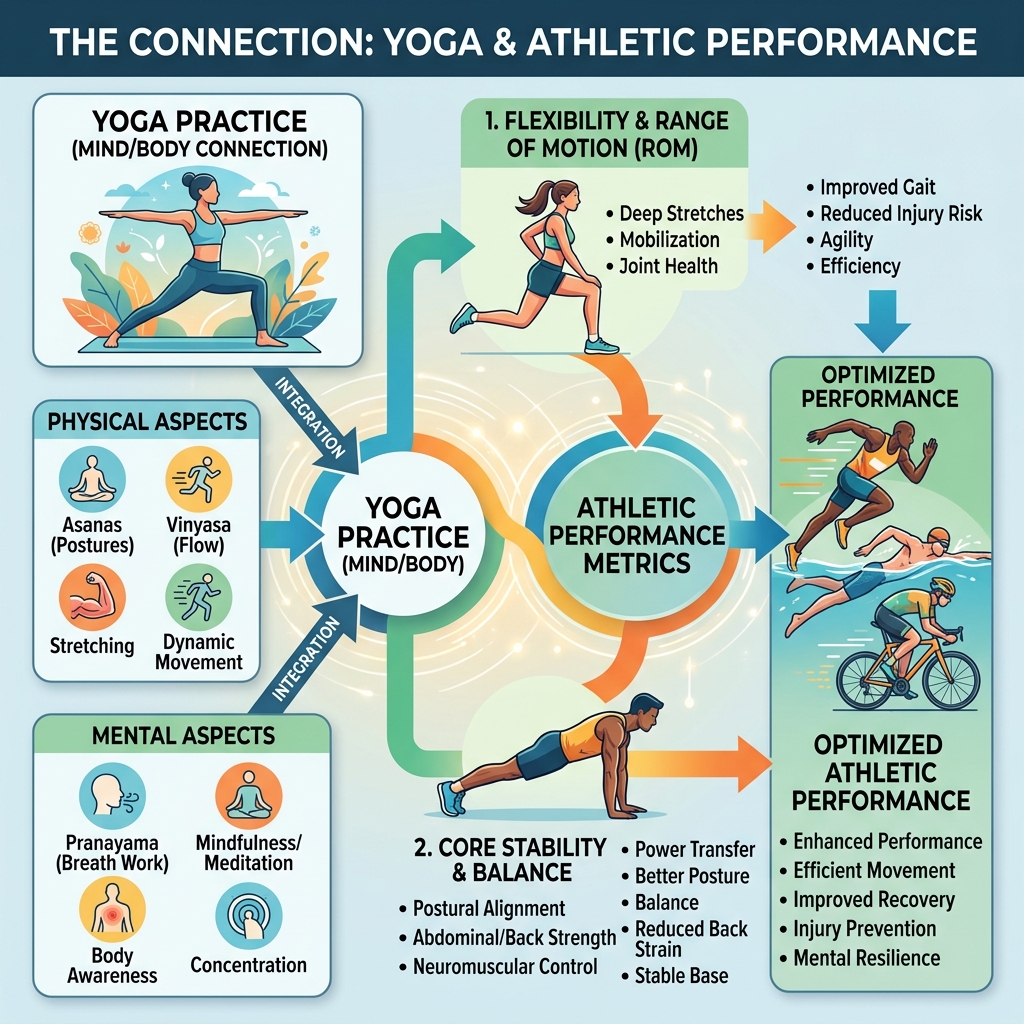
The benefits of a consistent yoga practice directly translate into measurable improvements on the field or track. It addresses weaknesses that traditional strength training often overlooks.
1. Enhancing Flexibility and Range of Motion
Flexibility is foundational to athletic power. When muscles are tight, they restrict movement patterns, forcing joints to compensate and increasing injury risk. Yoga poses gently lengthen muscle groups—such as hamstrings, hips, and shoulders—allowing for a greater range of motion (ROM).
- Why it matters: Increased ROM means you can execute movements with better mechanics, generating more power and reducing the strain on connective tissues.
- Example: A swimmer with improved shoulder flexibility can achieve a deeper catch phase in their stroke, improving efficiency.
2. Building Deep Core Strength (The Powerhouse)
The core is not just about visible abdominal muscles; it encompasses the deep stabilizing muscles of the spine, pelvis, and hips. Yoga poses require continuous engagement of these stabilizers, building isometric strength that supports all major movements.
- Why it matters: A strong core acts as a central anchor, improving posture, reducing chronic lower back pain, and ensuring efficient power transfer from your legs to your upper body (and vice versa).
- Actionable Tip: Focus on poses like Plank Pose and Boat Pose to build deep abdominal and spinal stability.
3. Improving Balance and Proprioception
Balance requires the coordination of multiple muscle groups working together, a concept known as proprioception (the body's awareness of its position in space). Yoga poses challenge this system constantly.
- Why it matters: Better balance translates to quicker reaction times, improved agility, and stability during dynamic movements—critical for sports like basketball or martial arts.
- Example: Practicing Warrior III strengthens the ankles and hips, improving lateral stability needed when cutting quickly on a court.
Why is Yoga Crucial for Injury Prevention?
Many athletic injuries stem not from overtraining, but from muscle imbalances. We often strengthen what we use (e.g., quads in runners) while neglecting opposing or stabilizing muscles (e.g., glutes and hamstrings). Yoga provides the perfect corrective tool.
Addressing Muscle Imbalances
Yoga helps restore proper muscle length and strength ratios. By holding poses that stretch tight areas (like hip flexors from running) and simultaneously strengthening weak areas (like glutes), you correct the underlying mechanical issues that lead to overuse injuries.
- Key Focus: Balancing the anterior (front) muscles with the posterior (back) muscles.
- Example: For runners, incorporating poses like Pigeon Pose helps release tight hip flexors and stretches the deep gluteal muscles, reducing strain on the knee joint.
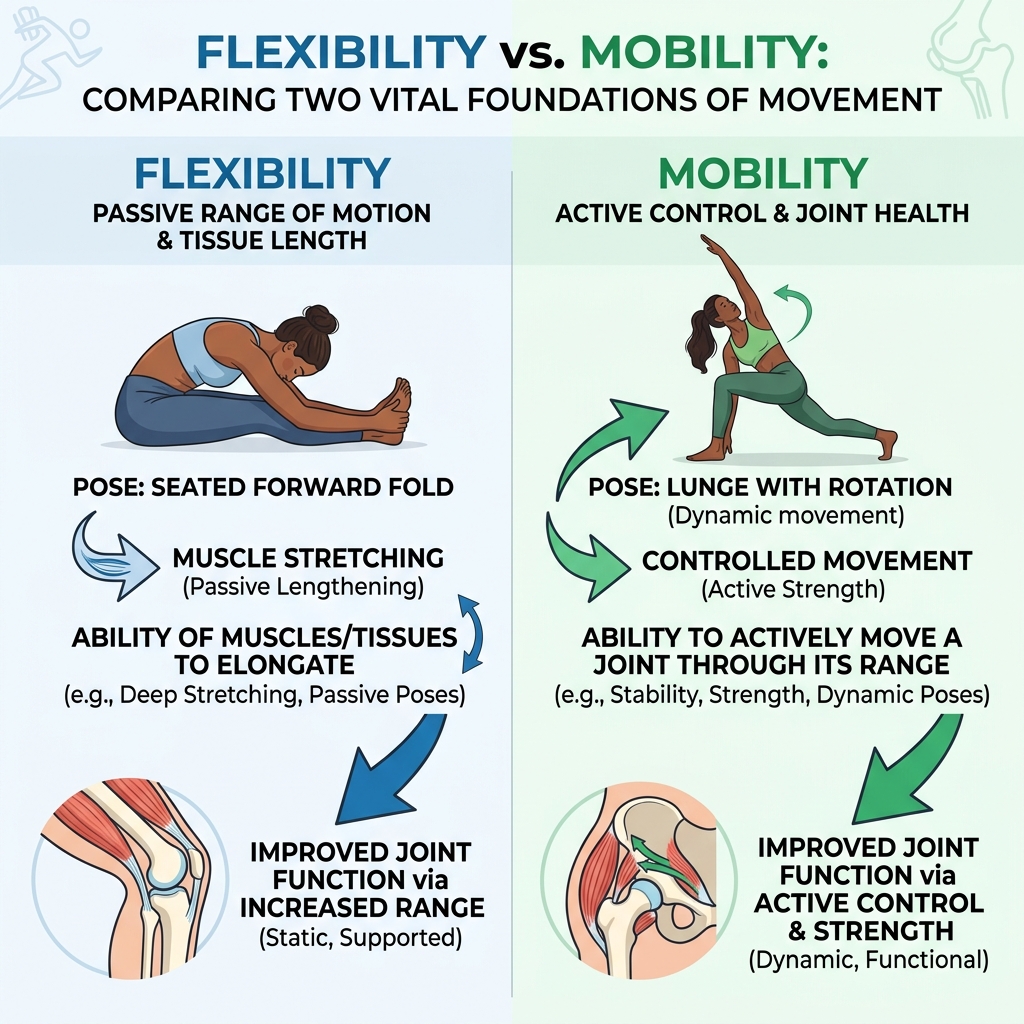
Improving Joint Mobility vs. Flexibility
While often used interchangeably, they are distinct:
- Flexibility is the passive length of a muscle (how far you can stretch it).
- Mobility is the active control through that range of motion (the ability to use the full range safely).
Yoga trains mobility. It teaches your joints and muscles how to move together efficiently, which is the ultimate goal for peak athletic performance.
How Does Yoga Aid in Recovery?
Recovery is where adaptation happens—the physical process of getting stronger after stress. Yoga aids recovery through two primary mechanisms: reducing inflammation and calming the nervous system.
Reducing Muscle Soreness (DOMS)
Gentle, restorative yoga practices increase blood flow to tired muscles. This enhanced circulation helps flush out metabolic waste products (like lactic acid) and delivers vital nutrients, speeding up the repair process.
- Best Practices: Incorporate poses like Child's Pose or Legs-up-the-Wall Pose after a tough workout to promote deep relaxation and lymphatic drainage.
Promoting Mental and Physical Restoration
High-intensity training can elevate cortisol (stress hormone) levels, keeping the body in a constant state of "fight or flight." Yoga’s emphasis on controlled breathing (Pranayama) activates the parasympathetic nervous system.
- The Benefit: This shift signals to the body that it is safe to rest and repair. It lowers heart rate, reduces anxiety, and dramatically improves sleep quality—all crucial elements of peak athletic performance.
Yoga Poses for Specific Athletic Needs
Instead of focusing on specific sports, focus on the needs of your sport. Incorporating these pose types will benefit most athletes:
🏃 For Endurance Athletes (Runners, Cyclists)
These poses target hip opening and hamstring release to prevent tightness and improve stride length.
- Low Lunge (Anjaneyasana): Stretches the hip flexors and quadriceps.
- Downward-Facing Dog (Adho Mukha Svanasana): Excellent for stretching hamstrings, calves, and spinal circulation.
- Figure Four Stretch: Targets the deep glutes and piriformis muscle, crucial for knee stability.
🏋️ For Strength Athletes (Weightlifters, CrossFit)
These poses build core stability and joint resilience under load.
- Plank Pose (Phalakasana): Builds total body isometric strength.
- Warrior I & II (Virabhadrasana I/II): Develops powerful leg drive and lateral stability.
- Mountain Pose (Tadasana) with Core Engagement: Teaches perfect vertical alignment under load.
🏊 For Dynamic Athletes (Swimmers, Gymnasts)
These poses focus on shoulder girdle mobility and spinal articulation.
- Cobra Pose (Bhujangasana): Strengthens the back muscles and opens the chest, improving posture for overhead movements.
- Thread the Needle: Gently stretches the upper back and shoulders, vital for swimmers' catch phase.
- Eagle Pose (Garudasana): Improves shoulder stability and coordination.
🧘 Practical Tips: Integrating Yoga into Your Routine
Consistency is more important than intensity when starting out. Treat yoga as a pre-hab/rehab tool, not just a workout.
- Warm Up First: Never attempt deep stretches on cold muscles. Start with dynamic movements (like gentle joint rotations) before holding poses.
- Listen to Your Body: Pain is a signal to stop or modify the pose. Discomfort and stretching sensations are normal; sharp pain is not.
- Prioritize Breathing: Focus on deep, diaphragmatic breathing throughout your practice. This enhances both physical stretch and mental recovery.
- Start Small: If you only have 10 minutes, focus entirely on core poses (Plank, Cat-Cow) and deep breathing. Consistency trumps duration.
Summary & Next Steps
Yoga is a powerful complement to any athletic regimen. By dedicating time to mindful movement, athletes can proactively manage muscle imbalances, enhance joint mobility, and improve the mental resilience needed for peak performance. Incorporating even short, regular sessions of yoga will help you stay healthier, recover faster, and ultimately unlock your full physical potential.
Disclaimer: The information provided in this article is for general informational purposes only and is not intended as a substitute for professional medical advice, diagnosis, or treatment. Always seek the advice of your physician or other qualified health provider with any questions you may have regarding a medical condition or treatment. Never disregard professional medical advice or delay seeking it because of something you have read on this website.
Frequently Asked Questions
Yes. While poses can be tailored, the core principles—improving mobility and stability—benefit nearly every sport, from running to weightlifting.
Aim for consistency. Incorporating 2–3 sessions per week of dedicated practice is highly effective for noticeable improvements in performance and recovery.