Why Does Poor Posture Affect My Spine and Energy?
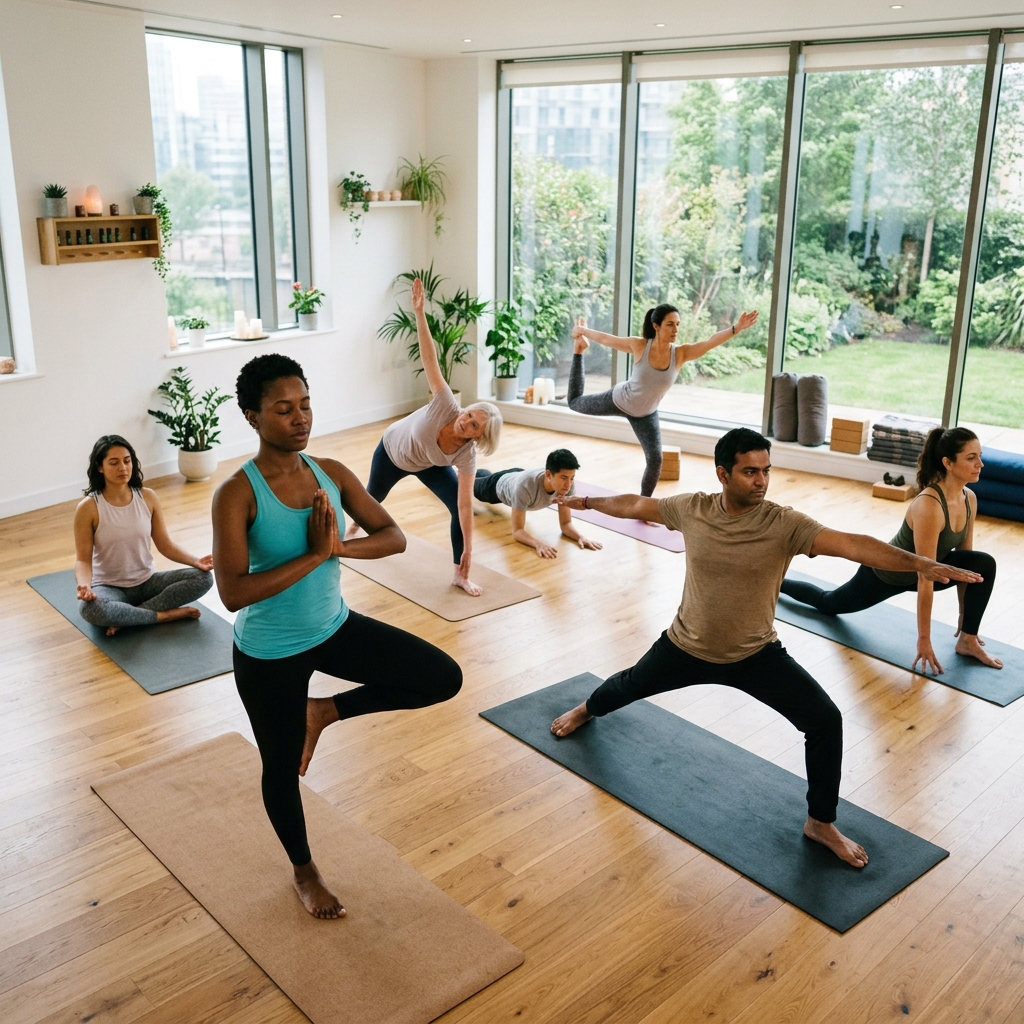
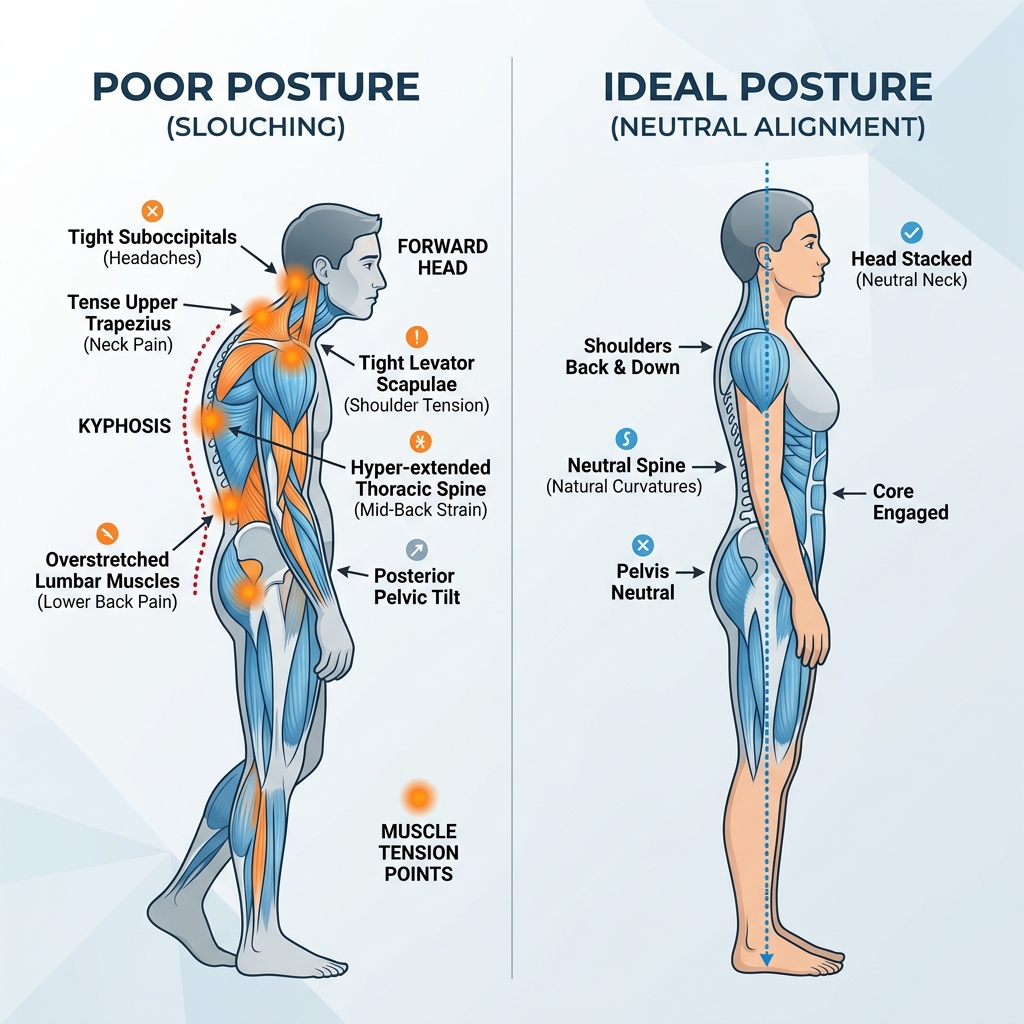
Sedentary modern life often leads to poor posture, causing chronic strain on the spine, neck, and shoulders. This forward-leaning habit compresses the chest cavity, restricting deep breathing and reducing oxygen flow. Yoga is a holistic practice that counteracts these effects by strengthening the core muscles (the body's natural corset), improving spinal flexibility, and teaching conscious alignment. By retraining your body to stand tall and breathe deeply, yoga promotes better circulation, boosts energy levels, and significantly reduces chronic pain.
How Does Yoga Improve Spinal Alignment?
Yoga is much more than just stretching; it's a powerful combination of physical postures (asanas), controlled breathing (pranayama), and mindfulness. This comprehensive approach makes it uniquely effective for spinal health because it addresses both the physical tightness and the mental habits that contribute to poor posture.
🧘♀️ The Core Benefits of Yoga for Spinal Health
- Strengthens Deep Core Muscles: A strong core (including abdominal, back, and pelvic floor muscles) is crucial for supporting the spine naturally. Yoga poses engage these deep stabilizers, creating a protective "corset."
- Increases Flexibility and Range of Motion: Consistent practice stretches tight muscles in the hips, hamstrings, and shoulders—areas that often become stiff from sitting—allowing the spine to move through its full, healthy range.
- Promotes Body Awareness (Proprioception): Yoga forces you to pay close attention to how your body is positioned. This heightened awareness allows you to make conscious postural adjustments throughout your day, even when not on a mat.
- Enhances Breathing Efficiency: By emphasizing deep, diaphragmatic breathing, yoga counteracts the shallow chest breathing associated with slouching. Better breath equals better oxygenation and higher energy.
What Are the Best Yoga Poses for Spinal Mobility?
To improve spinal alignment, you need poses that gently mobilize the spine in all directions: flexion (rounding), extension (arching), and rotation (twisting). Remember to listen to your body; never force a pose.
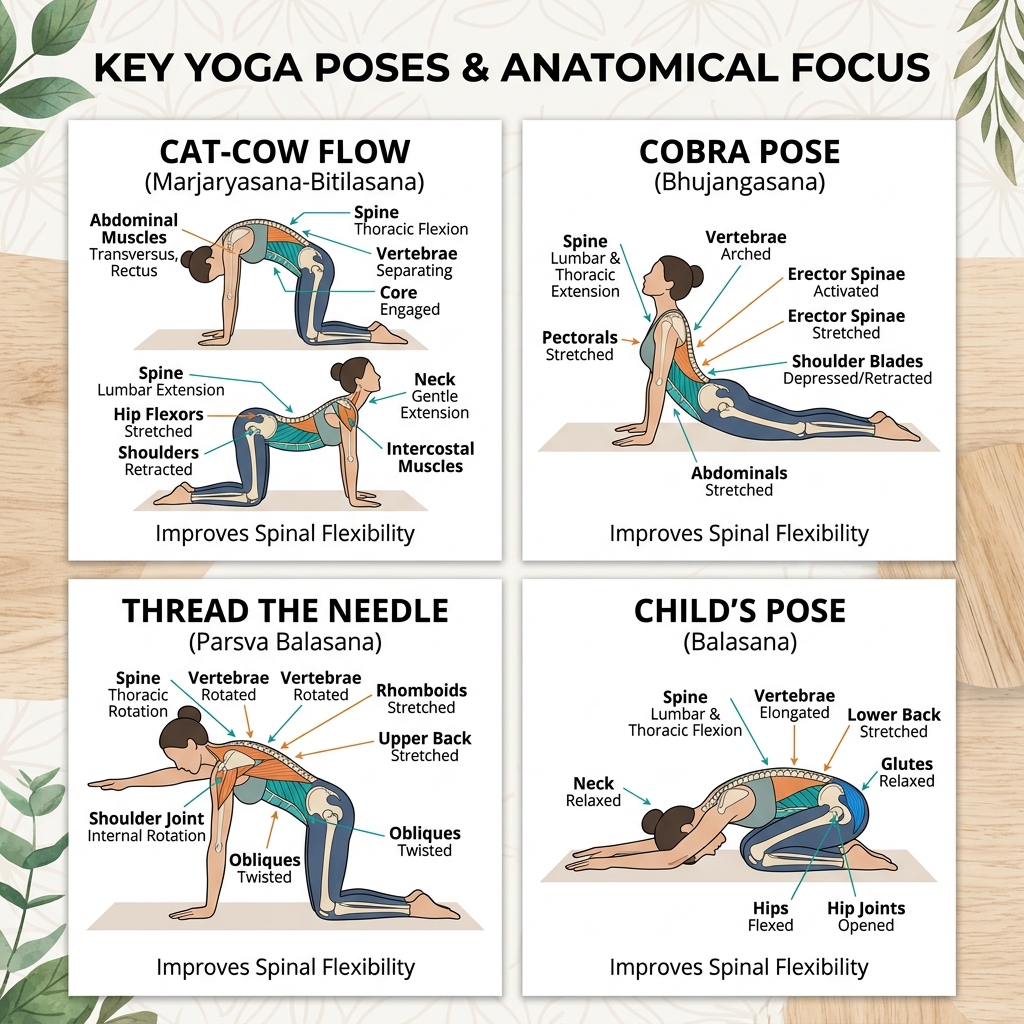
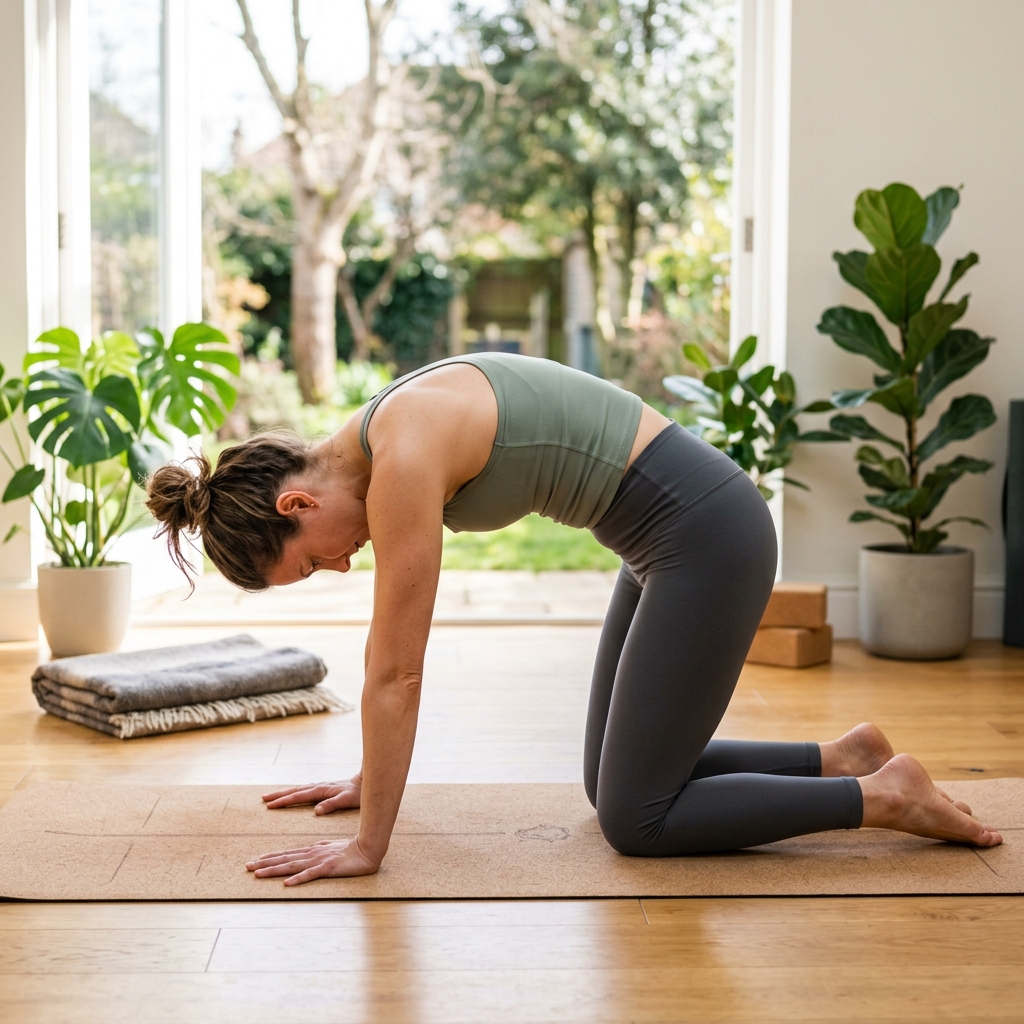
Cat-Cow Pose (Marjaryasana to Bitilasana)
This foundational sequence is excellent for warming up and mobilizing the entire spine.
How to Perform:
- Start on hands and knees, ensuring wrists are under shoulders and knees are under hips.
- Inhale (Cow): Drop your belly toward the floor, lift your chest, and gently look up. This extends the spine.
- Exhale (Cat): Round your back towards the ceiling, tucking your chin to your chest, drawing your navel in. This flexes the spine.
- Flow smoothly between these two movements for 5–10 breaths, coordinating each movement with your breath.
Key Benefits:
- Increases spinal flexibility and mobility.
- Stimulates abdominal organs and circulation.
- Excellent warm-up for back pain relief.
Thread the Needle Pose (Urdhva Mukha Pasasana Variation)
This gentle, restorative twist helps release deep tension in the upper back and shoulders.
How to Perform:
- Start on hands and knees.
- Inhale and lift your right arm up.
- Exhale and "thread" that same arm under your left armpit, resting your right shoulder and head on the mat.
- Hold for a few breaths, focusing on deep relaxation in the upper back.
- Repeat on the opposite side.
Key Benefits:
- Stretches the shoulders and neck gently.
- Releases tension accumulated from desk work.
- Improves thoracic (mid-back) mobility.
Gentle Seated Twists (Ardha Matsyendrasana Variation)
Twisting is vital for maintaining spinal health, as it keeps the vertebrae mobile and helps release stiffness in the lower back.
How to Perform:
- Sit with legs extended. Bend your right knee and place your foot outside your left thigh.
- Inhale: Lengthen your spine, reaching the crown of your head upward.
- Exhale: Gently twist your torso to the right. Place your left hand on your right knee and your right hand behind you for support.
- Hold the twist while keeping your sit bones grounded. Breathe deeply into the stretch.
- Repeat on the other side.
Key Benefits:
- Improves spinal rotation and flexibility.
- Stimulates digestion by compressing abdominal organs.
- Reduces lower back stiffness.
Backbending Poses: Cobra & Gentle Bridge
Backbends are crucial for counteracting the constant rounding (flexion) that happens when we sit all day, helping to open the chest and strengthen the posterior chain.
Cobra Pose (Bhujangasana):
- Lie face down with hands under shoulders. Inhale and gently lift your chest off the floor, using your back muscles. Avoid pushing up with your hands. Keep your neck long and relaxed. This strengthens the spinal extensors.
Gentle Bridge Pose (Setu Bandhasana):
- Lie on your back with knees bent and feet flat. Inhale and press into your feet, lifting your hips off the floor until your body forms a straight line from shoulders to knees. Engage your glutes to support the lift. This strengthens the hamstrings and glutes while supporting the lower spine.
Important Safety Note: If you have acute or severe back pain, always consult a physical therapist before attempting these poses.
Beyond Posture: The Link Between Breath, Spine, and Energy
Good posture is not merely about looking straight; it's fundamentally linked to respiratory efficiency. When we slouch, our rib cage compresses, making deep, diaphragmatic breathing difficult. This leads to shallow chest breathing, which limits oxygen intake—a primary cause of feeling fatigued or sluggish.
Yoga teaches pranayama (breath control), which directly addresses this issue. By practicing deep belly breaths:
- You maximize lung capacity and oxygen flow.
- You activate the parasympathetic nervous system, reducing stress-related muscle tension that contributes to poor posture.
- The synergy between proper alignment and conscious breathing creates a powerful cycle of improved physical and mental well-being.
Summary & Next Steps for Lasting Change
Improving spinal health is an ongoing journey, not a quick fix. By integrating consistent yoga practice into your routine—even just 10 minutes daily—you can make significant strides toward better posture and reduced pain.
Actionable Tips for Daily Improvement:
- Set Reminders: Every hour while sitting, perform a mini-stretch: roll your shoulders back and down, and gently tilt your head side to side.
- Prioritize Core Work: Incorporate planks or bird-dog exercises into your routine to build foundational core strength that supports the spine.
- Walk Mindfully: When walking, focus on lifting your chest slightly and imagining a string pulling you up from the crown of your head.
By treating movement as medicine and breath as fuel, you can harness the transformative power of yoga to stand taller, breathe easier, and live with greater vitality.
Disclaimer: The information provided in this article is for general informational purposes only and is not intended as a substitute for professional medical advice, diagnosis, or treatment. Always seek the advice of your physician or other qualified health provider with any questions you may have regarding a medical condition or treatment.
Frequently Asked Questions
Always consult a physical therapist or doctor first. Modify all poses and never force movement; listen to your body.
Consistency is key. Aim for 10–20 minutes of gentle stretching or yoga daily, even on busy days.